Parallels paranormal activity/entanglement/organized energy field

Exploring the Intersections of Time, Quarks, and the Big Bang

Scientists often avoid paranormal topics due to their vague nature, unverifiable experiences, and association with fraud. However, these phenomena, which defy natural laws, share a common principle of heightened awareness that processes paranormal information while sensory input is minimized. Activities like telekinesis, clairvoyance, and mind-reading require a state of trance, although some individuals experience these phenomena spontaneously.

The spirit, as a memory and identity cocoon, transcends dimensions and time, intertwining with both the micro and macro structures of matter. This concept mirrors quantum mechanics, where phenomena like wave-particle duality and quantum entanglement challenge traditional scientific understanding.

The quantum world, with its peculiar behaviors, parallels the spiritual realm. Both require an observer to collapse wave functions and influence outcomes, indicating a deeper connection. The lack of a unifying theory between quantum mechanics and relativity suggests an “in-between world” that encompasses both realms.

This “in-between world” also encompasses paranormal phenomena, often dismissed by science. However, these phenomena may provide insights into the underlying spiritual dimension of matter. The constants of nature, essential for life, hint at an evolutionary process beyond the last Big Bang, potentially guided by a spiritual force.

Paranormal phenomena like disembodiment, aura reading, and retrocognition suggest a universal spiritual presence capable of transcending time and space. This spiritual energy can influence natural laws, offering a holistic perspective that bridges the gap between quantum mechanics, relativity, and spirituality.

In conclusion, the integration of quantum mechanics, relativity, and spirituality reveals a universe where everything is interconnected. This holistic approach challenges conventional scientific boundaries and opens the door to understanding the deeper, spiritual aspects of our existence.

Read more

Near death experience;entering black hole;dark organized energy field;Heaven/Nirvana

The Driving Force of Evolution: The Role of Spirit in Matter-Antimatter Tension

Evolution, as a process, is driven by the tension between matter and antimatter, with the spirit playing a pivotal role in overcoming this opposition to foster progress and development. The spirit acts as a stabilizing force, creating order from the destructive potential of matter-antimatter interactions. It serves as a cocoon encompassing all existing matter and antimatter, facilitating the evolutionary process of the universe by carrying and protecting information.

Human life, a product of successful evolution, showcases rational and complex behavior, making humanity the dominant species. However, this dominance has led to excessive energy consumption and environmental degradation. Egotistical behavior, driven by material gain and desire, has become institutionalized in politics and economics, causing ecological imbalance and social inequalities.

The last Big Bang resulted in a matter-dominated universe, with antimatter largely destroyed. The spirit stabilized this imbalance, allowing life to evolve towards greater complexity and efficiency. However, this progress also led to increased self-interest and material pursuit. Spiritual education and cultural environments should counterbalance this excessive consumption and promote ecological harmony.

Political movements should challenge the unjust outcomes of market mechanisms. Globalization and capitalist market principles have diminished political independence, creating a spiral of increased productivity and quality. This spiral produces winners and losers, with some enjoying high consumption while others suffer declining living conditions. Nature also suffers from this unchecked productivity.

Moderation in energy and resource consumption is urgently needed but challenging to achieve. The market does not inherently promote ecological or social well-being. The spirit must guide humanity away from destructive capitalist mechanisms towards sustainable practices. Spiritual wealth should help people recognize the dangers of current consumption patterns and shift towards restoring the original matter-antimatter symmetry.

The spirit’s role is to diminish material excess and foster a new synthesis of spirit and antimatter. While this seems contradictory, the spirit has driven the evolutionary progress that now threatens human survival. Human intelligence, a product of this progress, must now be tempered with spiritual wisdom to avoid catastrophe.

Spiritual maturity requires seeing beyond superficial pleasures and material success. Achieving this involves hard work and a shift in values, recognizing the relativity of life’s pleasures. True happiness comes from spiritual depth, not material fulfillment.

The synthesis of spirit and matter initiated evolution, while the antithesis of matter and antimatter formed original symmetry. Restoring this symmetry through spiritual wealth is crucial. This spiritual life, free from material constraints, can be seen as Nirvana—a state of complete liberation from egotism and material limitations.

Life After Death and the Role of Karma

Life after death involves a process of spiritual cleansing. The spirit, carrying memory and identity, transitions to a state where natural laws do not apply, such as black holes. These regions, with immense gravitational pull, serve as cleansing grounds for karma. If a conscience is heavily burdened, it attracts new life, starting a fresh cycle of growth and purification.

Black holes, where time stands still, allow the spirit to reflect and cleanse. Karma dictates the new life path, seeking to rectify past mistakes. A difficult life may serve as punishment and purification, leading to spiritual maturity. Those who err in life must be guided towards better behavior, emphasizing the importance of helping others improve.

Moral and Ethical Framework for Society

Society must combat injustice and abuse, helping both victims and perpetrators improve their situations. Teaching morality and ethics, rather than relying solely on punishment, is essential. A society guided by spiritual values fosters a supportive environment for all individuals.

Morality and ethics, though subjective, should be grounded in the spirit. The principle of treating others as one would like to be treated should be central to this framework. This spiritual foundation ensures a coherent set of values guiding human behavior towards a harmonious coexistence.

In conclusion, the interplay between matter, antimatter, and spirit drives evolution. The spirit’s role is crucial in balancing material progress with ecological and social harmony. By fostering spiritual wealth and moral integrity, humanity can achieve a sustainable and fulfilling existence.

Read more
Short-term/long-term brain memory;coordinated by organized energy field

The Dynamics of Memory: Autopilot Actions, Emotional Imprints, and Evolutionary Significance
Memory and Routine Actions

Memory plays a crucial role in the execution and retention of countless daily actions. Many actions are performed on autopilot, where balanced coordination from the senses, muscles, and brain allows for seamless execution. These routine actions, honed through repetition, create a motoric memory that resides in the long-term memory but can be lost with muscle or brain degeneration. Such actions, often subconscious, lack the socio-emotional aspect that typically enhances the retention and significance of memories.
Emotional Imprints and Long-Term Memory

Emotional experiences, particularly those involving human contact, nature, or art, are more likely to be imprinted on the brain. These experiences are encoded with sensory and emotional information, making them more memorable. The intensity and emotional charge of an experience determine its retention in long-term memory. Significant emotional experiences, both positive and negative, undergo a process of screening during sleep, where their intensity and emotional value are evaluated. If an experience exceeds a certain intensity threshold, it is stored in the long-term memory; otherwise, it is deemed insignificant.
The Fluidity of Memory

Memory is dynamic and evolves over time. Early memories are stored deeply and may become obscured as new experiences and stimuli are encountered. The significance of a memory can change with time, influenced by shifting perspectives and circumstances. Consequently, what was once important may lose its value, and memories may become harder to retrieve unless triggered by specific stimuli like pictures, faces, or quotations.
Dreams and Memory Processing

Dreams play a vital role in processing recent experiences, especially those with strong emotional charges. Positive experiences, such as feelings of love or sexual encounters, can be relived, while negative experiences may lead to nightmares. Dreams help reduce the emotional charge of traumatic memories, aiding in emotional recovery and maintaining spiritual balance. This process aligns with the saying “time heals all wounds,” as dreams help to suppress and manage the impact of painful memories.
Evolutionary Aspects of Memory

Memory is influenced by both spiritual and physical changes over a person’s lifetime. The dynamic nature of memory affects long-term retention, with preferences and importance shifting over time. Early memories may become obsolete or relegated to the subconscious, which serves as a repository for less significant memories. In the animal kingdom, instinctual behaviors related to reproduction and defense are examples of evolutionary memory, passed down through genetic codes.

Successful behaviors that enhance survival are encoded in genetic DNA through evolutionary processes. These behaviors are materialized in genetic codes via repetitive successful actions, ensuring they are preserved for future generations. This evolutionary mechanism highlights the interplay between genetic and experiential memory, shaping the behavior and survival strategies of both humans and animals.
Conclusion

Memory is a complex and dynamic phenomenon influenced by routine actions, emotional experiences, and evolutionary processes. While many actions are performed subconsciously and lack emotional significance, experiences with strong emotional charges are more likely to be retained in long-term memory. Dreams and the passage of time play critical roles in processing and managing these memories, helping individuals maintain emotional balance. Evolutionary memory, encoded in genetic DNA, ensures the transmission of successful behaviors across generations, illustrating the intricate connection between memory, survival, and the ongoing evolution of life.

Read more

Anti-gravity;forward arrow of time with increasing entropy driven by dark energy

The True Nature of Antigravity
Pre-Big Bang Supersymmetry Equation

The true nature of antigravity can be traced back to a pre-Big Bang supersymmetry equation, expressed as:
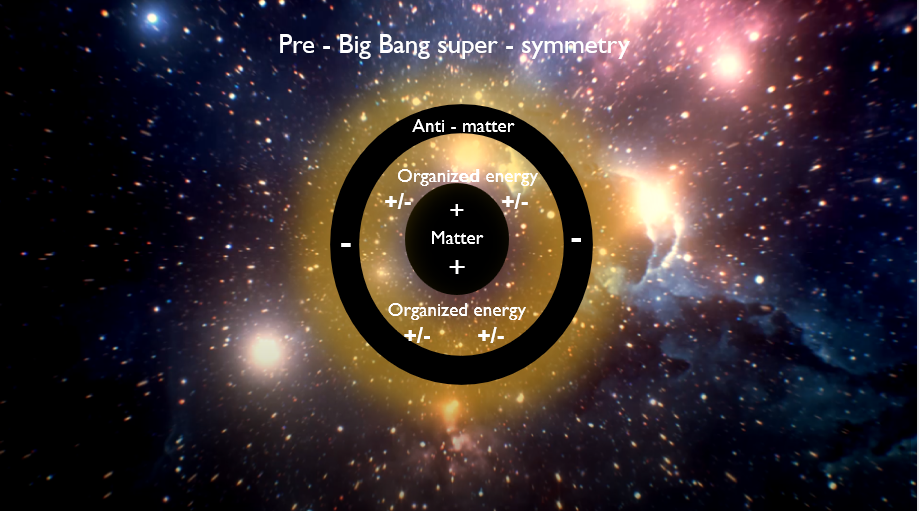
3/3= 1/3 (matter +) +1/3 ( Spirit +− ) + 1/3 (anti-matter − )

This equation suggests a balanced state where matter, spirit, and antimatter coexisted in equilibrium.
Supersymmetry Breakdown and the Big Bang

At the inception of the Big Bang, this supersymmetry was broken, leading to the emergence of the known forces of nature. The process can be outlined in four steps as described in your book:

Breaking of Supersymmetry (Big Bang Initiation): The initial symmetry state breaks, giving rise to the fundamental forces.
Emergence of Five Fundamental Forces: From the broken symmetry, five forces unfold:
Gravity (+)
Electromagnetic force (+/-)
Weak nuclear force (+/-)
Strong nuclear force (+/-)
Antigravity (-)

These forces, along with the space-time dimensions, emerged from the Big Bang, driven by the supersymmetry equation.
Antigravity and Dark Energy

Antigravity derives from the antimatter component of the supersymmetry equation. It possesses a charge opposite to that of gravity and contributes to the expansion of the universe. This force is linked to dark energy, which constitutes approximately 70.66% of the universe, with the remaining 28% being baryonic and non-baryonic matter, predominantly found near black holes.

Dark energy acts as the energy source for antigravity, facilitating the continued expansion of the universe by opposing the attractive force of gravity.
The Role of Antigravity in the Expanding Universe

Antigravity’s unique charge causes it to act contrary to gravity. While gravity pulls matter together, antigravity pushes it apart, thus driving the universe’s expansion. This expansion aligns with the law of increasing entropy and decreasing organization, consistent with thermodynamic principles.
Cosmological Constant and Antigravity

The critical factor at the Big Bang’s onset was the cosmological constant, derived from the breakdown of the five forces:
13 (gravity)+26 (electromagnetic force)+212 (weak nuclear force)+212 (strong nuclear force)+13 (antigravity)31​ (gravity)+62​ (electromagnetic force)+122​ (weak nuclear force)+122​ (strong nuclear force)+31​ (antigravity)

This forms the basis for the cosmological constant, approximated as 1.33. This value correlates with the inflationary period post-Big Bang, providing a theoretical framework for rapid expansion.
Correlations and Implications

The cosmological constant (1.33) exhibits significant correlations with other fundamental measurements:

The Higgs particle value of 125 or 15 / 12
The positive curved space index omega 1.33

These correlations suggest that the principles derived from the pre-Big Bang supersymmetry equation hold substantial validity. The consistent appearance of the value 1.33 across different fundamental aspects of the universe reinforces the theoretical framework that includes antigravity as a crucial force driving the universe’s expansion and aligning with the observed properties of dark energy.
Conclusion

The concept of antigravity is rooted in a pre-Big Bang supersymmetry state, broken at the Big Bang, leading to the emergence of fundamental forces, including antigravity. This force, linked with dark energy, drives the universe’s expansion. The cosmological constant of 1.33, supported by various fundamental measurements, provides a compelling theoretical explanation for the existence and influence of antigravity in the evolving universe.

Read more

Brain;mind/memory/intelligence/consciousness;by collective organised energy field

Memory – Reality and Brain Touch by Organized Energy Field

Memory is a complex, multifaceted phenomenon involving both short-term and long-term storage. It is an intricate interplay of biochemical and neural processes, involving sensory inputs and brain activity. Understanding the organization and transformation of memory provides insights into how we perceive, store, and retrieve information.
Short-Term and Long-Term Memory

Initially, all experiences are stored in short-term memory. Sensory signals and brain activities are converted into number sequences and temporarily held in specific brain regions. A memory consists of various components such as light, smell, sound, touch, and emotion, which are stored in different parts of the brain via a neural network.
Conversion and Storage of Memory

The retrieval of memory is triggered by new impressions that have similar number values. These impulses are transported through a biochemical transfer process where number codes are converted into biochemical stimulus codes. This process is analogous to digital communication, where speech is digitized for transmission and then re-converted into sound.

Brain tissue is subject to wear and renewal, and variations in biochemical matter can cause memory to fade. However, the real memory is stored in the brain as a number sequence, making it everlasting. This permanence of memory storage is supported by evidence outlined in parts 2 and 3 of the referenced book.
Impact of Degeneration on Memory

When short-term memory is affected by aging or brain disease, the process of converting digital codes to biochemical ones is hindered. This affects the transfer of information to long-term memory. However, existing memories can still be accessed, as evidenced by the ability of people with memory impairments to recall past events. The degeneration affects the creation of new memories, as the biochemical transformation process is incomplete, leading to unrecognized impulses within the neural networks.
Role of Biochemical Labels

Brain centers responsible for memory assign biochemical labels to number codes, ensuring proper logistical processing. Sensory inputs receive biochemical labels that are interpreted emotionally and hormonally. The intensity of an experience enhances the power of the memory, as subjective interpretation varies among individuals based on personal labels attached to number sequences.
Communication and Interpretation

Miscommunication occurs due to the subjective interpretation of impulses by different parties. The brain is continually bombarded with impulses and biochemical interactions, requiring a balance between rest, action, and reaction. A balanced upbringing and education help individuals grow into harmonious and cooperative beings, capable of controlling primal instincts.
Societal Balance and Individual Growth

Society must maintain a balance at both macro and micro levels to protect individuals from each other. This involves a subtle growth process, requiring checks and balances, and extensive research. Emotionally balanced individuals who act wisely are accepted by their environment. Positive learning experiences, obtained through upbringing, education, and communication, are etched into neural networks, promoting positive behavior patterns.
The Role of Repetition

Repetition is crucial for learning and skill development. Positive patterns of behavior are reinforced through repeated practice, leading to automated behavior. Skills require consistent practice, where repeated actions enhance memory storage and improve performance.
Addressing Social Inequality

Addressing social inequality requires significant effort. Positive patterns of behavior should be enforced to suppress negative ones. Although this process is challenging and often only partially successful, it has a profound impact. Governments should provide resources to combat social inequality, as even partial success can make a substantial difference.

In summary, memory involves a dynamic process of encoding, storing, and retrieving information through biochemical and neural mechanisms. The interplay between personal experiences, societal influences, and repetitive practice shapes memory and behavior, highlighting the importance of a balanced and supportive environment for individual and societal growth.

Read more

Memory;collective organized energy field;invisible virtual database of the brain

Memory, Reality, and Brain Touch by Organized Energy Field

Memory is a multidimensional phenomenon that cannot be fully understood by reducing it to biochemical or technical elements. It is timeless and dimensionless, intertwined with the human spirit and consciousness. Scientific inquiry provides the most promising avenue for understanding this complex process, although current knowledge still offers only a partial view of how the brain coordinates complex behaviors and stores memories.
The Brain’s Functional Mapping

The brain’s functionality and the coordination of its parts have been extensively charted. Impulses are transferred via synapses and neurotransmitters, which carry electric pulses of the nerves to various brain parts, enabling appropriate responses. The senses—touch, light, sound, and smell—are gateways to the outside world, allowing the brain to process signals and respond reflexively or store them as lasting memories.
The Nature of Memory

Memory is an impression of reality composed of sensory signals such as sound, light, smell, emotion, and touch. Insignificant events are typically remembered only briefly, but significant experiences are retained longer. What determines significance and the process of storage and retrieval is complex and subjective.
The Role of Number Sequences

Every observation is a reflection of the spiritual cocoon that enwraps all matter, represented as a sequence of imaginary numbers. These sequences are continuously entered and stored in the brain via the senses. Recognition of events is triggered by common number sequences, which serve as keys to previously stored information. The extent of concentration and emotional attachment determines the vividness of a memory.
Subjective Interpretation of Reality

Objective reality is translated into number sequences, which are then subjectively interpreted and labeled through personal awareness. Human personality and self-awareness, remnants of previous lives, influence personal choices and behavior, making objective reality personal. Negative observations are stored in the subconscious, while positive ones are labeled for easy retrieval. During sleep, stored number sequences are screened for their long-term usability, with significant ones stored for future interaction and less useful ones relegated to deeper memory or the subconscious.
Memory Formation and Development

Memory formation is influenced by upbringing, education, and environmental interactions, enhanced by self-awareness and language development. Early childhood memories are sparse because the ability to label and store number sequences is not fully developed. As individuals grow and learn, their memory capabilities expand, shaped by continuous sensory observation and personal experiences.
Routine and New Memory Information

Routine matters are etched into behavior patterns, much like an automatic pilot, and do not contribute significantly to the existing memory file unless significant changes occur. Brain damage, such as from a stroke, can impair memory processing, affecting the ability to create new memories while preserving old ones.
Memory and Self-Awareness

Memory is intertwined with self-awareness and the spirit. It is not a static data bank but responds to both internal desires and external information. The spirit, a timeless and dimensionless cocoon, interacts with the brain’s organic matter, influencing thought and behavior through imaginary number sequences. Brain damage can disrupt this interaction, affecting memory and function.
The Spirit’s Role in Memory and Creativity

The spirit, or self-awareness, is capable of imagination and creativity, independent of memory. It can create art, music, and fantasy, demonstrating an ability to reshape the environment beyond mere observation and reaction. This capacity is part of our collective memory and inherited spiritually, suggesting a morphogenetic field.
Conclusion

Memory is a complex interplay of biochemical, neural, and spiritual processes. It involves the continuous flow and interpretation of sensory data, influenced by personal awareness and creativity. Understanding memory requires acknowledging its multidimensional nature, integrating scientific knowledge with an appreciation of the timeless and dimensionless aspects of the human spirit. This holistic view recognizes that memory is not merely a biochemical process but a dynamic interaction between the brain, consciousness, and the organized energy field of the spirit.

Read more

Invisible collective organized energy field;non-locality/entanglement

Non-locality: Entangled with Space-Time – E.P.R.

The Einstein-Podolsky-Rosen (E.P.R.) experiment was devised to challenge the completeness of quantum mechanics, particularly the phenomenon of entanglement, where two particles remain interconnected regardless of the distance separating them. When one particle’s state is measured, the other’s state can be instantaneously predicted, a phenomenon that seemed to contradict the principles of relativity which limit the speed of information transfer to the speed of light.
The E.P.R. Paradox

In the E.P.R. experiment, two particles are entangled and sent in opposite directions. According to classical physics, once separated by a large distance, these particles should not be able to exchange information faster than the speed of light. However, the results showed that measuring the state of one particle (e.g., its spin) allowed for the reliable prediction of the state of the other particle, regardless of the distance between them.
Non-locality and the Role of the Spirit

The non-local behavior observed in entangled particles suggests that their mutual starting point and the distance between them do not inhibit information exchange. This exchange happens instantaneously, defying the relativistic speed limit. This phenomenon can be understood through the concept of the spirit as a carrier of information.

The spirit is described as matter symmetrical, transcending physical space and time constraints. It operates non-locally and locally, unaffected by the laws of relativity and physical constants. This trinity of matter, spirit, and antimatter enables the spirit to maintain information exchange between entangled particles.
Information Exchange in Entangled Particles

When the first particle’s state is measured, the spirit condition of this measurement is shared with the second particle, which exhibits a complementary state. The spirit acts as a cocoon and carrier of memory and structure, explaining why the entangled particles exhibit predictable behavior regardless of the distance.

This understanding aligns with the E.P.R. experiment results, where entangled particles maintain a shared state through the spirit’s non-local influence. This cocoon of spirit provides a framework for understanding the interconnectedness and communication between entangled particles, irrespective of spatial separation.
Einstein and the Nature of Quantum Mechanics

Einstein famously rejected the notion of randomness in quantum mechanics, encapsulated in his quote, “God does not play dice with the universe.” He believed in an underlying deterministic reality, which he thought quantum mechanics, as interpreted through Heisenberg’s uncertainty principle, failed to account for completely.

The spirit’s role in entanglement offers a deterministic aspect to what appears as probabilistic outcomes in quantum mechanics. It suggests a deeper, more interconnected structure of reality where the spirit ensures coherence and information exchange beyond the apparent randomness and uncertainty.
Conclusion

The E.P.R. experiment highlights the non-local nature of entangled particles, challenging classical notions of space and time. The concept of the spirit as a non-local and local carrier of information provides a plausible explanation for the instantaneous communication observed in entangled particles. This perspective integrates the deterministic view that Einstein favored with the probabilistic nature of quantum mechanics, offering a more holistic understanding of the interconnected fabric of reality.

Read more