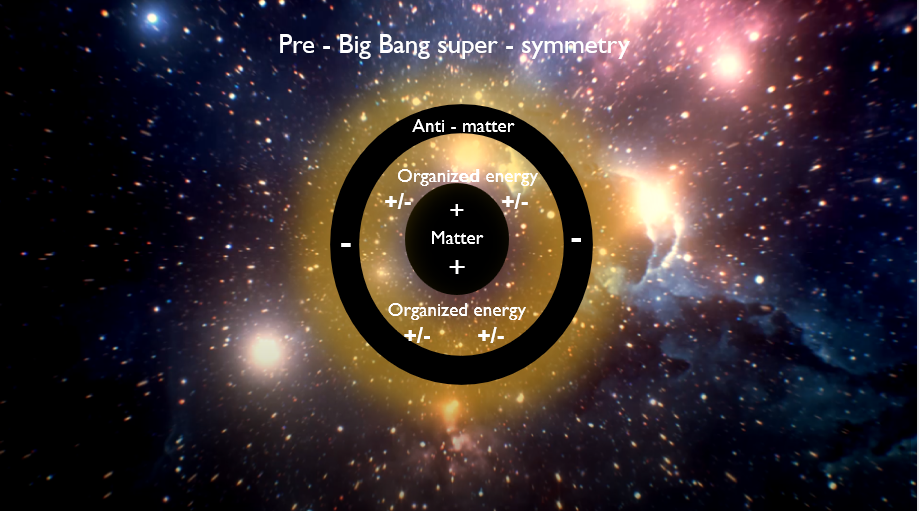
The observation problem in quantum mechanics arises from the peculiar role observation plays in defining quantum reality. Unlike classical physics, where objects have definite properties regardless of whether they are being observed, quantum mechanics suggests that measurement fundamentally influences and even creates the properties of a quantum system. This leads to the question of how, and even if, observation creates reality at the quantum level.
Here’s a breakdown of the key aspects:
The wave function and superposition: quantum systems are described by wave functions, which represent the probability of finding a particle in a particular state.
Before measurement, a quantum system can exist in a superposition of multiple states simultaneously. This superposition collapses into a single, definite state upon measurement.
The observer effect: the act of observing a quantum system inherently disturbs it.
This disturbance can alter the system’s state, making it difficult to determine its properties prior to measurement. The Heisenberg uncertainty principle highlights this limitation, stating that there’s a fundamental limit to how precisely certain pairs of properties (like position and momentum) can be known simultaneously.
Interpretations of measurement: Copenhagen interpretation: this is the most widely accepted interpretation, which posits that the wave function collapses upon measurement, and the observer plays a crucial role in this collapse. Many-worlds interpretation: this interpretation suggests that the wave function doesn’t collapse, but rather, the universe splits into multiple branches, each representing a different outcome of the measurement.
Objective collapse theories: these theories propose that wave function collapse happens spontaneously, regardless of observation, and that measurement is merely a trigger for this collapse.
The “problem”: the observation problem isn’t about how to measure, but rather what the measurement does to the quantum system. It raises fundamental questions about the nature of reality, consciousness, and the role of the observer in defining physical properties.
Implications: the observation problem has profound implications for our understanding of the universe and the nature of reality. It highlights the limitations of classical physics in describing the quantum world. It continues to be a topic of intense debate and research in quantum physics.
In essence, the observation problem in quantum mechanics forces us to confront the seemingly paradoxical nature of reality at the smallest scales, where measurement and observation play a fundamental role in shaping what we perceive as reality.
Let’s link the observation problem in quantum mechanics (measurement problem) with the organised energy field in a clear structured way:
Structure and organisation of the observation problem in quantum mechanics in relation to the organised energy field
The observation problem ; In quantum mechanics, particles exist in a superposition (multiple possible states). When measured, this superposition collapses into one definite state — but why or how this collapse happens is unknown. This is known as the measurement/observation problem.
Traditional Explanations ; Copenhagen interpretation: collapse happens because of observation/measurement. Many worlds: all possibilities exist, but we only experience one. Hidden variables: unknown factors might determine outcomes.
Role of the organised energy field The organised energy field can be seen as a mediating structure between potential states (quantum possibilities) and realised states (our observation). Memory / spirit factor: the field acts like a universal database storing all potential outcomes. Observation doesn’t create reality, but selects from already-organised possibilities. Buffer role: just as spirit stabilises matter–antimatter, it may stabilise the transition from uncertain probability to definite reality. Subjective element: consciousness (part of the spirit factor) influences which path is actualised ,explaining why observation has such a strange role in quantum mechanics.
Organisation Process Quantum state: particle in superposition (all possibilities). Interaction with Organised Energy Field: the field structures and stabilises possible outcomes, maintaining coherence. Observation/consciousness involvement: consciousness interacts with the field, selecting a path. Collapse to reality: The chosen possibility manifests as the observed result.
Implications The organised energy field bridges physics and consciousness. It suggests that the act of observation is not random, but guided by an underlying informational structure. This could unify the quantum world (uncertainty) with the macroscopic world (order).
In summary: the observation problem in quantum mechanics can be explained through the organised energy field as a universal memory and stabilising factor. It organises quantum possibilities and allows consciousness to collapse them into a structured reality, preventing chaos and ensuring coherence between matter, thought, and physical law.
The organised energy field and Quantum Mechanics
Grasping the concept of quantum mechanics requires great imagination. Matter behaving both as particles and waves is far removed from the way in which the material world usually is perceived. On an elementary level it is difficult to describe the diffuse material world, because place and impulse cannot be measured precisely simultaneously.

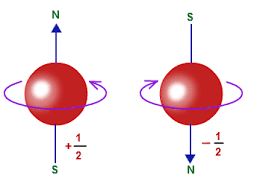
The uncertainty principle causes a measuring problem that has far-reaching consequences. It is a wondrous thing when the phenomenon one is trying to measure collapses. It happens because of some sort of interaction between matter and observation, which presupposes a subjective power that influences matter at an elementary level.
Measuring adds quanta of light to the object that is being observed. The spirit could be a candidate to explain this phenomenon. The observer causes a measuring problem at quantum level and the observer causes relativity at macro level.
The spirit (cocoon) is present in all systems of life and matter, despite the success of reduction ism. Time manifests itself as a wave at quantum level. The measuring problem within quantum mechanics was one of the main reasons that led me to develop my theory. The observer (spirit) is part of the system.
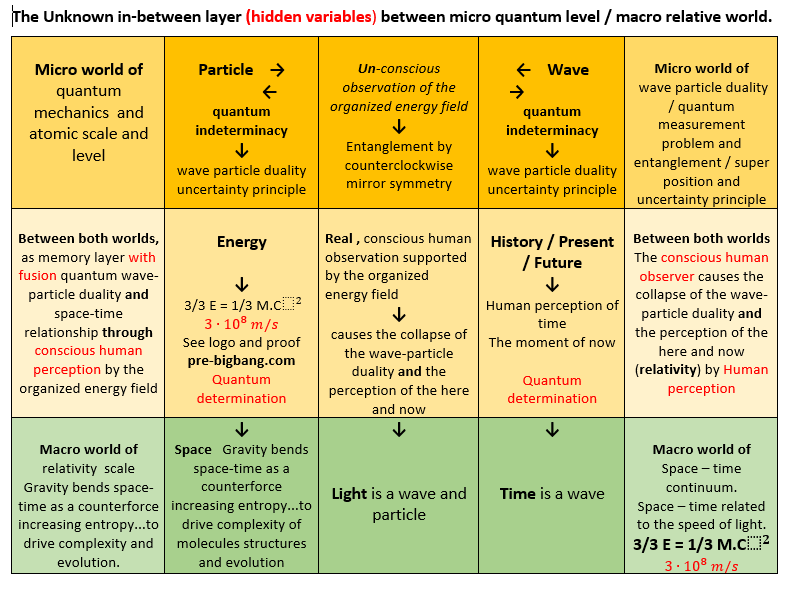
The object of observation is influenced by measuring equipment that is set and operated by human power. Interpreting measured data is a spiritual process.
When and where something is measured , is determined by humans, while the actual measuring is done by machines that are products made by humans. Thus human and spiritual acts and judgments are indirectly represented through the measuring equipment.
https://pre-bigbang.duckdns.org/einstein-said-gravity-is-not-a-force/