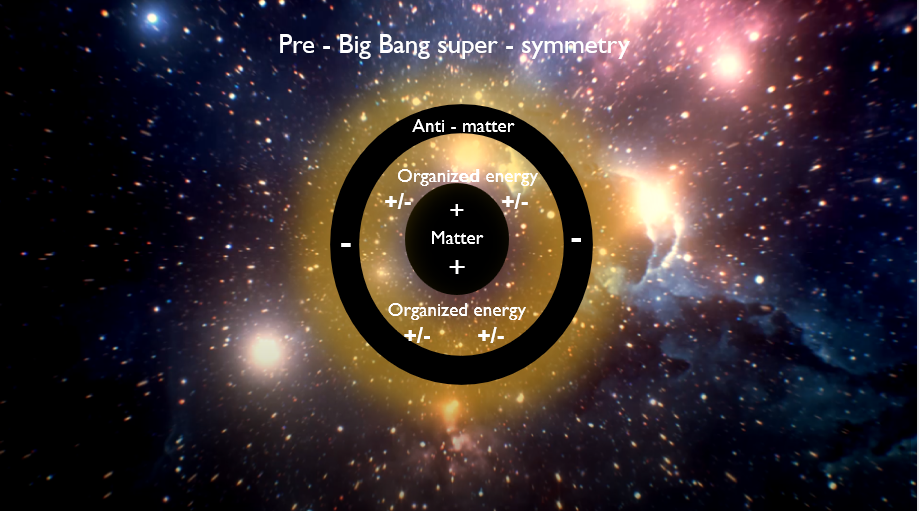
The organized energy field acts unseen as a virtual database of philosophical vision .The transfer of information from short-term to long-term memory, known as memory consolidation, involves both cellular and systems-level changes in the brain. Rehearsal, organization, and meaningful association through application and experience can enhance this process.
Here’s a more detailed breakdown: short-term memory (STM) and long-term memory (LTM):
STM is a temporary storage system with limited capacity, while LTM has a much larger capacity and can store information for extended periods.
The role of the hippocampus: The hippocampus is crucial for forming new memories and initially storing them as short-term memories.
Memory consolidation: this process involves converting short-term memories into long-term memories.
Cellular changes: during consolidation, structural and functional changes occur in neurons, strengthening neural connections.
Systems-level changes: the brain reorganizes neural networks, potentially involving the cortex, to store long-term memories.
Enhancing consolidation: rehearsal, organization of information, and connecting new information with existing knowledge (elaboration) can all facilitate the transfer from STM to LTM.
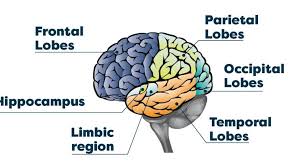
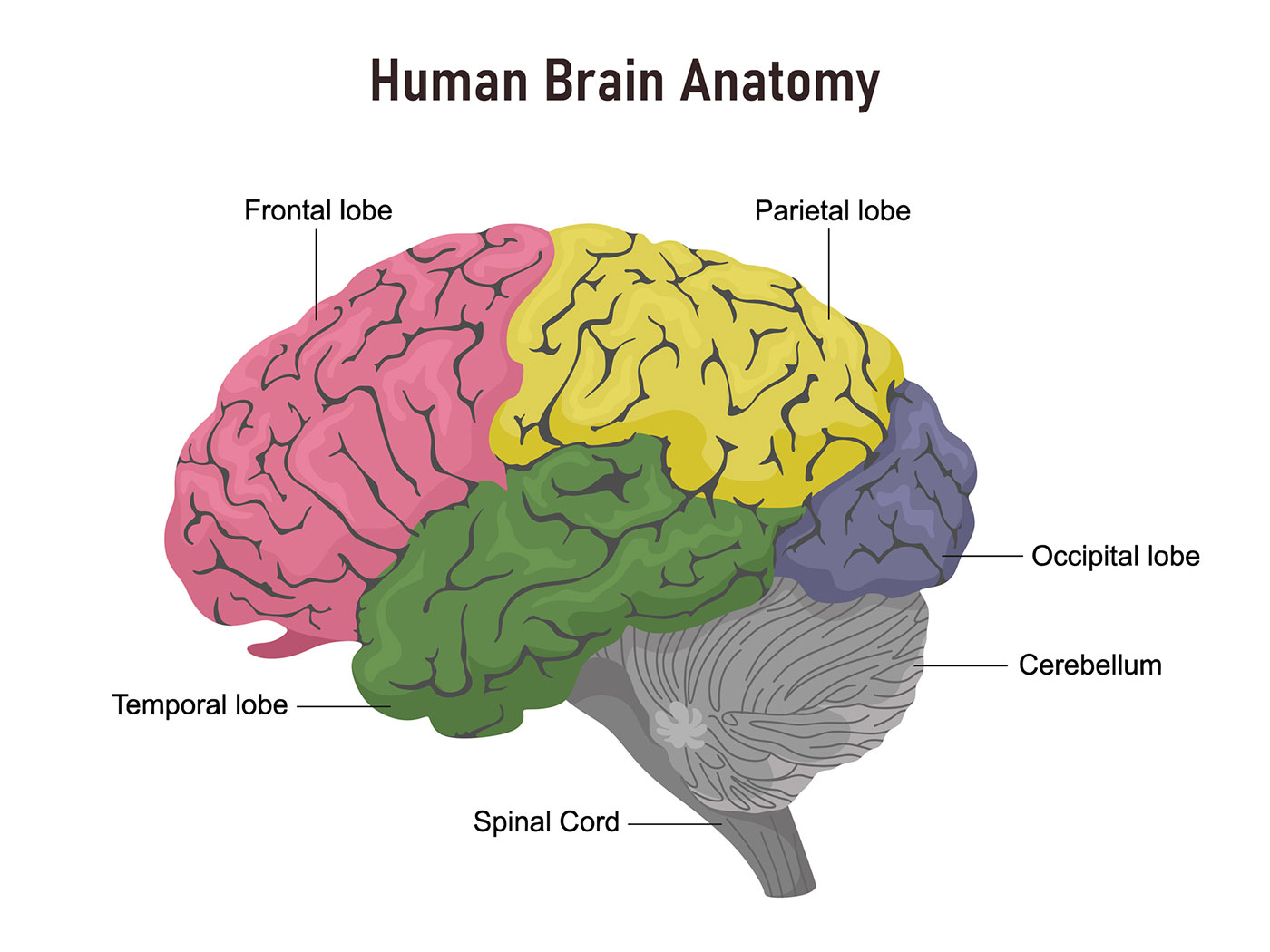
Brain regions involved: the prefrontal cortex, frontal lobe, parietal lobe, and hippocampus all play a role in short-term memory and its transfer to long-term storage.
Importance of consolidation: proper consolidation is essential for retaining information for later retrieval and for building a stable memory system.
Here’s a structured explanation linking short-term to long-term memory transfer with the organised energy field. Structure and organisation of memory transfer in relation to the organised energy field Short-term memory (STM) ; short-term memory is the brain’s temporary storage, holding impressions, sensory input, and immediate experiences. It functions like a buffer, where neuronal impulses and synaptic activity encode fleeting information. Filtering and emotional weight ; not all information is retained; the organised energy field acts as a filtering cocoon. Significance, emotional intensity, and personal awareness determine whether experiences are elevated from STM to long-term storage. Negative impressions may be suppressed into the subconscious, while positive or meaningful ones are highlighted for retention.
Transfer to long-term memory (LTM) ; in biological terms, STM is consolidated into LTM through synaptic plasticity (strengthening of connections). In energetic terms, the organised energy field stabilises the number-sequence patterns of experience, embedding them in a non-local, timeless memory structure. Sleep and dreaming play a role: the brain reviews, categorises, and integrates experiences, while the energy field provides coherence and alignment with the universal memory matrix. Long-term memory (LTM) is not fixed in cell mass but exists non-locally in the organised energy field, hovering as a virtual memory cocoon. The biological brain retrieves memories via resonance with these non-local sequences, guided by self-awareness. Thus, memory is not just biochemical—it is a dynamic interaction between neural networks and the field of consciousness.
Organisation principle ; STM = transient impulses + immediate awareness Filtering = selection via energy field + personal significance. LTM = stabilised resonance patterns in the organised energy field
In this view, the organised energy field guarantees that memory is not lost despite cellular renewal and biological change. It acts as the continuity bridge between physical brain processes and the timeless spirit dimension.
The dynamics of memory: autopilot actions, emotional imprints, and evolutionary significance
memory and routine actions. Memory plays a crucial role in the execution and retention of countless daily actions. Many actions are performed on autopilot, where balanced coordination from the senses, muscles, and brain allows for seamless execution.
These routine actions, honed through repetition, create a motoric memory that resides in the long-term memory but can be lost with muscle or brain degeneration. Such actions, often subconscious, lack the socio-emotional aspect that typically enhances the retention and significance of memories.
Emotional Imprints and Long-Term Memory
Emotional experiences, particularly those involving human contact, nature, or art, are more likely to be imprinted on the brain. These experiences are encoded with sensory and emotional information, making them more memorable. The intensity and emotional charge of an experience determine its retention in long-term memory.
Significant emotional experiences, both positive and negative, undergo a process of screening during sleep, where their intensity and emotional value are evaluated. If an experience exceeds a certain intensity threshold, it is stored in the long-term memory; otherwise, it is deemed insignificant.
The fluidity of memory ; memory is dynamic and evolves over time. Early memories are stored deeply and may become obscured as new experiences and stimuli are encountered. The significance of a memory can change with time, influenced by shifting perspectives and circumstances. Consequently, what was once important may lose its value, and memories may become harder to retrieve unless triggered by specific stimuli like pictures, faces, or quotations.
Dreams and memory processing ; dreams play a vital role in processing recent experiences, especially those with strong emotional charges. Positive experiences, such as feelings of love or sexual encounters, can be relived, while negative experiences may lead to nightmares. Dreams help reduce the emotional charge of traumatic memories, aiding in emotional recovery and maintaining spiritual balance. This process aligns with the saying “time heals all wounds,” as dreams help to suppress and manage the impact of painful memories.
Evolutionary aspects of memory ; memory is influenced by both spiritual and physical changes over a person’s lifetime. The dynamic nature of memory affects long-term retention, with preferences and importance shifting over time. Early memories may become obsolete or relegated to the subconscious, which serves as a repository for less significant memories. In the animal kingdom, instinctual behaviors related to reproduction and defense are examples of evolutionary memory, passed down through genetic codes.
Successful behaviors that enhance survival are encoded in genetic DNA through evolutionary processes. These behaviors are materialized in genetic codes via repetitive successful actions, ensuring they are preserved for future generations. This evolutionary mechanism highlights the interplay between genetic and experiential memory, shaping the behavior and survival strategies of both humans and animals.
Conclusion ; memory is a complex and dynamic phenomenon influenced by routine actions, emotional experiences, and evolutionary processes. While many actions are performed subconsciously and lack emotional significance, experiences with strong emotional charges are more likely to be retained in long-term memory.
Dreams and the passage of time play critical roles in processing and managing these memories, helping individuals maintain emotional balance. Evolutionary memory, encoded in genetic DNA, ensures the transmission of successful behaviors across generations, illustrating the intricate connection between memory, survival, and the ongoing evolution of life.
What becomes a memory to live on in future and history ? Countless actions seem to be executed on autopilot. Further analysis shows that many actions require a balanced coordination from the senses, muscles and brain. Repetitions of routine actions ensure they are seemingly executed by themselves. You know what will happen and what the consequences will be.
The right extent of concentration leads to a perfect sequence. These actions involve a motoric memory, which is clearly long-term based, but which is lost in case of muscle and/or brain degeneration. The same ‘trick’ is repeated time and time again. Only in case of extremely routine actions, such as monotonous work or housekeeping chores, it is executed subconsciously and hardly imprinted on the brain.
They lack a socio-emotional aspect, which ensures a personal element is attached to the action. This emotional experience usually happens in a context of human contact, or of nature and art. An observation expressed in code receives its value in smell, sound, vision, touch and emotion through human contact, nature and art.
 This emotional value can be positive, negative or neutral. Neutral experiences can be transferred to the long-term memory by reading, studying, practising and personal interest.
Big impressions, both negative and positive, are remembered because of the extra charge that is attached to the number code. Previously stored and emotionally charged codes are read and scanned during sleep.
The intensity and positive or negative emotional value are screened in dreams as to their usability for the long-term memory. When the threshold value for intensity is exceeded, the subjective memory will be passed on to the long-term memory. If the threshold value is not reached, the event apparently is too insignificant to be remembered.
The long-term memory spans a lifetime. The earliest memories are stored deepest and therefore cannot be easily retrieved. The world changes, as do the stimuli a human being experiences. Stimuli, or number codes, that correspond with memories, or number codes, from the early years become rare. They are not lost, but they are more or less snowed under.
Similar memories, or number codes, can dominate the original code because they may carry different emotional values. Consequently, memory is a dynamic phenomenon, open to new impressions. It is hard to imagine an absolute memory can exist.
Patterns of behavior and thought in the human brain keep on changing during the course of time and memory stimuli are labelled differently. What used to be important, can now have no value whatsoever.
What used to be important, and has been stored in the long-term memory, is no longer remembered due to changed circumstances and thinking, unless the individual is suddenly confronted with a picture, face or quotation that brings forgotten memories to life.
A highly charged memory, both positive and negative, can be relived in dreams. Usually, in dreams the experiences of the recent past are screened as to their usability for the long-term memory. Positive experiences could refer to feelings of love or sex. Negative experiences usually get a stronger imprint because of their emotional charge.
Nightmares could be a consequence. Thus, experiences of abuse and violence can make deep cuts and cause feelings of fear and disturbance. The phase of dreaming serves to restore spiritual balance and stability. A person should carry on with their life, even after extremely traumatic events. In dreams the emotional charge of the codes, or memories, is reduced.
In this context, ‘time heals all wounds’ is an apt saying. By reliving traumatic experiences in dreams it is possible to suppress the memory. It is a protective mechanism in order to repair spiritual damage.
In a demanding living and working environment a disturbed person is less capable and more vulnerable. This suppression mechanism helps people to pick up their lives purposefully and effectively, despite memories of painful and traumatic events.
Man’s lifetime spans various stages, during which a lot changes spiritually as well as physically. The body grows during a rather long start period, after which it fairly quickly ages and declines. Spiritual emotions change accordingly. What used to be very important, can be of no consequence ten or twenty years later.
Preferences and human behavior change and shift in time. Without any doubt this affects the long-term memory. Memory stimuli are labelled differently, because different matters are deemed important and preferences shift. It now seems as if these dynamics cause past times to become obsolete.
Labels attaching subjectivity have changed. Retrieving events from a long time ago becomes harder. Very early memories apparently become obsolete or seem to have ended up in the subconscious. The subconscious is not a separate memory component, but is a location within the brain that serves to store less important memories. In the animal world concepts like instinct and primal behavior are used.
Reproduction and defence are striking examples of these concepts. Apparently, every animal absorbs this hereditary behavior without any learning process. This type of memory comes from past selection processes.
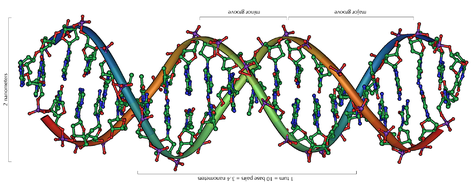
Behavior successful to survival is passed on to next generations. This happens by interaction between genetic codes and number codes, which were materialised in genetic DNA codes through repetitive successful behavior. This is an evolutionary process, etching successful behavior in DNA codes that are reproduced and saved for future offspring.
https://pre-bigbang.duckdns.org/the-meaning-of-life-in-a-different-perspective/
https://pre-bigbang.duckdns.org/einstein-said-gravity-is-not-a-force/