Quantum entanglement and non-locality are interconnected concepts in quantum mechanics, but they are not identical. Entanglement describes the correlation between two or more particles, where the state of one particle is linked to the state of the other, regardless of the distance between them.
Non-locality, in this context, refers to the apparent instantaneous influence between these entangled particles, seemingly violating the principle of locality (that an object can only be affected by its immediate surroundings).
Here’s a more detailed breakdown:
Entanglement: entanglement is a quantum mechanical phenomenon where two or more particles become linked together in such a way that they share the same fate. Correlation: If you measure a property of one entangled particle, you instantly know the corresponding property of the other, even if they are light-years apart.
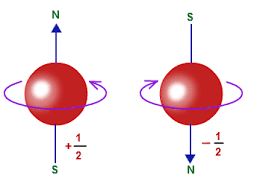
Example: If two entangled electrons are created with opposite spins, measuring one electron’s spin as “up” instantly reveals the other’s spin as “down”. Non-locality: non-locality describes the apparent instantaneous correlation between entangled particles, defying the classical understanding of how objects interact. Spooky action at a distance: Einstein famously called this “spooky action at a distance” because it suggests an instantaneous influence between particles without any apparent physical connection.
Not communication: while entangled particles are correlated, it’s crucial to understand that this non-local correlation cannot be used for faster-than-light communication.
Relationship between entanglement and non-locality: Entanglement is necessary for non-locality: Non-locality arises from the correlations created by entanglement. Non-locality is not always present: while all entangled states exhibit correlations, not all entangled states necessarily demonstrate non-local correlations that violate Bell’s inequalities (a way to test for non-locality). Non-locality is a feature of quantum mechanics: It’s a fundamental aspect of quantum theory, and experiments have repeatedly confirmed its existence.
In essence: entanglement is the state of correlation, while non-locality is the apparent instantaneous influence that arises from that correlation. They are intertwined, but not identical concepts.
Here’s a structured explanation of perception, quantum entanglement, and non-locality in relation to the organised energy field:
Quantum entanglement and non-locality Entanglement: two particles share a quantum state; measuring one instantly defines the state of the other, regardless of distance. Non-locality: this correlation happens faster than light and outside space-time constraints. These phenomena suggest that information exists in a realm beyond physical space-time.
The role of perception Perception is not only the interpretation of sensory input by the brain, but also the translation of quantum-level information into experience. Our brain operates as a receiver and filter, but the information field it taps into is non-local. Perception is therefore both biological (local) and energetic (non-local).
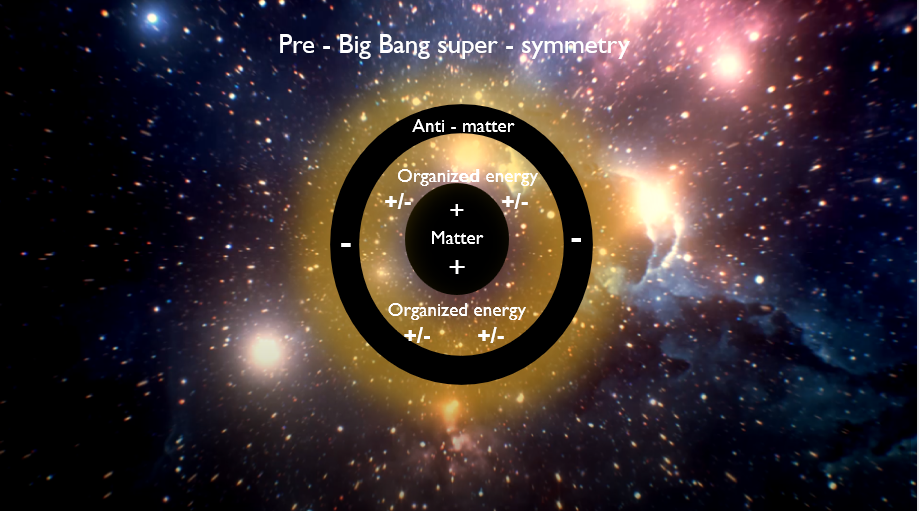
The organised energy field as mediator The organised energy field (OEF) provides the structural link between entanglement and perception. It functions as a cocoon of memory and structure where entangled information is preserved and exchanged. Through this field: entangled particles maintain coherence over distance. Consciousness can access non-local information (intuition, synchronicity, telepathy-like experiences).
Perception through entanglement Human perception may involve quantum-level entanglement between brain processes and the OEF. When neurons fire, they create energy patterns that resonate with non-local field structures. This resonance explains: Instant recognition of meaning or patterns. Shared perception between individuals (collective field of memory). Timeless awareness, where past, present, and future interconnect.
Organisation principles Local domain: sensory input → brain → short-term memory. Non-local domain: entanglement links brain processes with the OEF. Integration: perception emerges when the brain’s local signals resonate with the non-local organised field.
Implications Suggests that perception is not limited to the physical senses; it extends into the non-local field. Explains phenomena like: Sudden insights or “downloads” of knowledge. Paranormal experiences, precognition, and synchronicity. The unity of consciousness across individuals and environments. Provides a scientific-spiritual bridge, where entanglement is not just a physics anomaly, but the foundation of consciousness and perception.
Summary:
Perception is shaped not only by brain activity but also by quantum entanglement and non-locality, mediated through the organised energy field. This field preserves and transmits entangled information, enabling subjective experience, shared consciousness, and intuitive knowledge beyond space-time limitations.
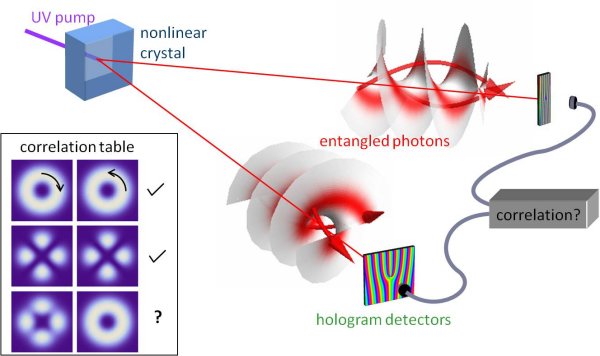
The Einstein-Podolsky-Rosen (E.P.R.) experiment was devised to challenge the completeness of quantum mechanics, particularly the phenomenon of entanglement, where two particles remain interconnected regardless of the distance separating them. When one particle’s state is measured, the other’s state can be instantaneously predicted, a phenomenon that seemed to contradict the principles of relativity which limit the speed of information transfer to the speed of light.
The E.P.R. paradox In the E.P.R. experiment, two particles are entangled and sent in opposite directions. According to classical physics, once separated by a large distance, these particles should not be able to exchange information faster than the speed of light. However, the results showed that measuring the state of one particle (e.g., its spin) allowed for the reliable prediction of the state of the other particle, regardless of the distance between them.
Non-locality and the role of the organised energy field The non-local behavior observed in entangled particles suggests that their mutual starting point and the distance between them do not inhibit information exchange. This exchange happens instantaneously, defying the relativistic speed limit. This phenomenon can be understood through the concept of the spirit as a carrier of information.
The spirit is described as matter symmetrical, transcending physical space and time constraints. It operates non-locally and locally, unaffected by the laws of relativity and physical constants. This trinity of matter, spirit, and antimatter enables the spirit to maintain information exchange between entangled particles.
Information exchange in entangled particles When the first particle’s state is measured, the spirit condition of this measurement is shared with the second particle, which exhibits a complementary state. The spirit acts as a cocoon and carrier of memory and structure, explaining why the entangled particles exhibit predictable behavior regardless of the distance.
This understanding aligns with the E.P.R. experiment results, where entangled particles maintain a shared state through the spirit’s non-local influence. This cocoon of spirit provides a framework for understanding the interconnectedness and communication between entangled particles, irrespective of spatial separation.
Einstein and the nature of quantum mechanics Einstein famously rejected the notion of randomness in quantum mechanics, encapsulated in his quote, “God does not play dice with the universe.” He believed in an underlying deterministic reality, which he thought quantum mechanics, as interpreted through Heisenberg’s uncertainty principle, failed to account for completely.
The spirit’s role in entanglement offers a deterministic aspect to what appears as probabilistic outcomes in quantum mechanics. It suggests a deeper, more interconnected structure of reality where the spirit ensures coherence and information exchange beyond the apparent randomness and uncertainty.
Conclusion ; The E.P.R. experiment highlights the non-local nature of entangled particles, challenging classical notions of space and time. The concept of the spirit as a non-local and local carrier of information provides a plausible explanation for the instantaneous communication observed in entangled particles. This perspective integrates the deterministic view that Einstein favored with the probabilistic nature of quantum mechanics, offering a more holistic understanding of the interconnected fabric of reality.
Non-locality – entangled with Space Time – E.P.R
The E.P.R experiment was held to show that two particles that are sent in opposite directions can no longer exchange information, because of the large distance created between them. The result showed that when one particle was measured, the spinning condition of the other particle could be reliably predicted.

Their mutual starting point and consecutive distance did not prevent them from exchanging information, which happens faster than the speed of light. This is typically and relatively impossible. As a carrier of information, the spirit is matter symmetrical. But it has no physical limitations as to space and time.

It functions as a non local and local carrier of information, not bound by limitations of relativity, physical constants and laws, although it is part of these things through its trinity of matter – spirit – antimatter.
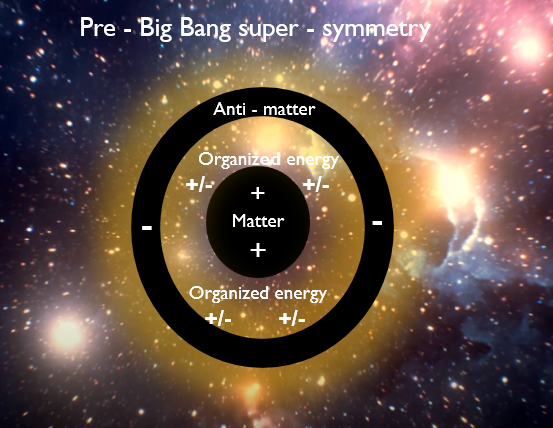
The first particle measurement of the spirit condition is shared with the second pair particle with a reverse spin.
The spirit condition is shared and carried by both particles, despite the distance between them. The spirit being a cocoon and carrier of memory explains the fact that in the E.P.R experiment the separate spinning particles show predictable behavior despite the sometimes immeasurable distances between these originally similar particles.
As a cocoon and carrier of memory and structure, the spirit offers a plausible explanation why two particles know what their spinning situation to each other should be, even at a great distance. A wondrous amalgamation of nature at micro and macro level.
Einstein would have said: God does not gamble in order to get a grip on an incomplete deterministic view of statistic realities of Heisenberg’s uncertainty principle within quantum mechanics.
https://pre-bigbang.duckdns.org/einstein-said-gravity-is-not-a-force/