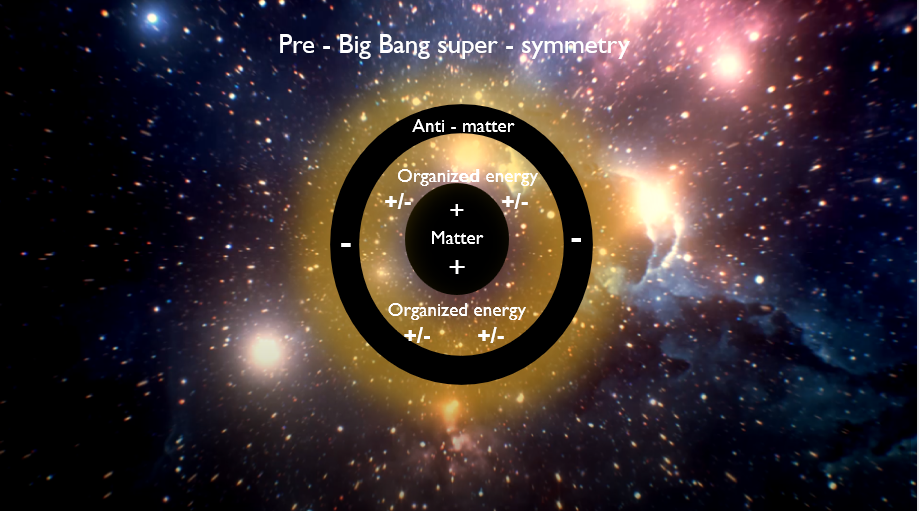
The organized energy field acts unseen as a virtual database of philosophical vision. In the realm of philosophy, “organization” can refer to several related concepts. It can describe the structure and arrangement of philosophical ideas within a specific school of thought, or it can be used to analyze the organizational structures of human institutions. Furthermore, philosophy itself is organized into different branches and sub-disciplines.
Organization of philosophical ideas: Within Schools of Thought: Philosophical schools like Platonism or Existentialism have a specific internal organization of ideas, concepts, and arguments. For example, Plato’s theory of Forms is a core element of his philosophical system, and his dialogues often explore these ideas in a structured way.
Theoretical vs. practical: Mainstream academic philosophy is broadly organized into theoretical and practical branches. Theoretical philosophy includes areas like metaphysics, epistemology, and philosophy of science. Practical philosophy encompasses ethics, political philosophy, and aesthetics.
Disciplines and sub-disciplines: Philosophy is further divided into various disciplines, such as philosophy of mind, philosophy of language, philosophy of religion, etc. Each discipline has its own set of concepts, methods, and debates, creating a complex web of interconnected ideas.
Organization of human institutions: Organizational philosophy: This refers to the underlying beliefs and principles that guide how an organization functions, including its structure, culture, and interactions with the external world.
Organizational structures: Philosophers also analyze the different ways human institutions are organized, such as bureaucratic, hierarchical, or network structures.
Organizational theory: This field within philosophy examines the nature of organizations, their goals, and how they operate, drawing on both philosophical and social science perspectives.
Philosophy of organizations: Conceptual Analysis: Philosophers analyze the fundamental concepts used to understand organizations, such as “organization,” “structure,” “agency,” and “purpose”.
Ethical considerations: Philosophy also explores the ethical implications of organizational practices, such as issues of power, fairness, and accountability.
Organizational change: Philosophers examine the nature of change within organizations, exploring the dynamics of stability and transformation.
The Role of individuals: Philosophy considers how individuals are shaped by and contribute to organizations, and how organizations influence individual identity and behavior. In essence, the concept of “organization” within philosophy encompasses the internal structure of philosophical systems, the organization of human institutions, and the philosophical analysis of organizations themselves.
Organisation in philosophy : Philosophy examines organisation on different levels, often abstract rather than biological:
Metaphysical organisation : Concerned with the structure of reality: how matter, mind, and spirit are ordered. Your model fits here: matter, spirit, and antimatter forming a balanced trinity that organises existence.
Epistemological organisation : How knowledge is structured and connected.,Philosophers study how perception, memory, and consciousness organise information into coherent reality.
Ethical & social organisation : Organisation of human behaviour and societies. Philosophers explore how moral values and laws emerge to organise collective life.
Philosophy of mind & consciousness : How thoughts, memory, and identity are organised within consciousness. Direct link to your theory: the spirit as an organising energy field behind thought and memory.
Connection to the organised energy field : Your concept of a spirit cocoon acting as a timeless memory aligns with metaphysical ideas of an organising principle (e.g., Plato’s Forms, Aristotle’s “entelechy,” or modern field theories of consciousness).
Philosophy provides the framework to discuss not just the mechanics but the meaning of organisation: why the universe, life, and consciousness are structured the way they are. The energy field could be interpreted as the bridge between metaphysics (universal order) and individual experience (personal memory and self-awareness).
This chapter explores the relationship between spirit, philosophy, and the meaning of life, bridging theology, philosophy, and science. It critiques attempts to explain spiritual matters using scientific principles, which, while popular, often fail to provide satisfying answers.
The author discusses the two types of rational choice: mathematical (construed concepts) and philosophical (pure concepts). Philosophy, with its complex and abstract language, often alienates those outside academic circles, leading the author to find it pretentious and overly intellectual.
While acknowledging the important contributions of philosophers in challenging false beliefs, the author expresses frustration with the complexity of philosophical texts, which obscure the deeper meaning of life. Instead, they suggest that the concept of spirit can be understood simply and universally in relation to the creation of life and evolution, emphasizing that truth lies in simplicity rather than intellectual verbosity.
This book, The World according to the Spirit, tries to answer questions about the meaning of life and to bridge the gap between theology, philosophy and science. I read numerous books that tried to define a framework for the elusive spirit and supernatural phenomena by applying tangible and verifiable scientific principles.
These books express the hope that there is such a connection. Some even tried to model it into a scientific framework. The people responsible became outcasts in purely scientific circles, though perhaps in silence admired by scientists for their courage. They were enthusiastically received by large groups of people that were interested in the implications science had for their world view. These attempts to explain spiritual matters and the latest scientific insights as to their relevance to questions about the meaning of life have been fairly accessibly phrased in popular academic books, lacking any mathematical formulae or strictly scientific use of language.
I read many books without finding the answer to my questions. However, they did provide an insightful overview of leading scientific theories. There are two types of rational choice: mathematics, relating to construed concepts, and philosophy, relating to pure concepts.
As a science, philosophy follows the hard logic of language instead of formulae. The question: What is the meaning of life?, is as old as the first human being that could reflect and analyse. Libraries can be filled with the books discussing this question from various cultural and religious points of view. Their approaches differ. They may focus on man alone, on man and his relation with fellow human beings, on man and nature, on man and language, on man as image of God, on man and his knowledge and understanding of his environment, et cetera.
The strictly scientific approach of philosophy makes it quite inaccessible to interested outsiders. The jargon and highly intellectual use of language result in the interested uninitiated to be unable to follow the strictly logic theories. They drown in a sea of abstract and intellectual use of language.
They get the impression philosophy is a game of words, relations and abstract problems. They can only grasp the basic ideas, after other people have explained them to them in simple and daily used words. I am not trying to dismiss philosophy as pompous intellectual wordplay, consisting of various analyses that only carry meaning in academic studies and making itself irrelevant to the normal world by formulating ideas so critically, loftily and intellectually.
History shows that philosophers have made too important a contribution in opposing false, strong-held opinions to rightfully claim so. But political and social changes were seldom instigated by philosophers. The used language and constructions of explanation are so complex, that a book full of philosophical clues cannot be fathomed, at least not by me. 

The human train of thought and process of communication is not conducted along such strict and consequent lines. They are more intuitive, unrealistic and less deterministic. I find the science of philosophy as it is practised by leading philosophers too pretentious; their theories are thwarted by the language used to express them.
Philosophers try to explain the meaning of life in its most elementary form and free of morals. To me, the resulting stream of words is strange. It is hard to write in easy-to-understand words. It is hard for me to understand that such an elementary philosophical question results in verbal diarrhoea with many intellectual tours de force in prolixity.
Which after reading cause one to think: Am I such a stupid nitwit that I cannot follow this argument? Of course I tried to know and understand the work of leading philosophers. I just got stuck in the purely academic and intellectual stream of words and so put the book aside unhappily, without having gained any new insights. It all sounds rather odd, looking at the subjects of this book.
The power of truth lies in its simplicity. Nature and man are complex creations. To understand this complexity is a challenge to human intelligence, even if scientifically trained, which leads one to sigh and think that the true deeper meaning will remain a divine mystery.
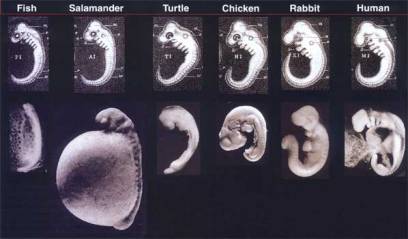
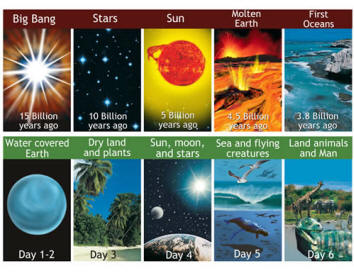
Despite intellectual ostentatiousness from the world’s leading scientists and thinkers. The concept of the spirit can be applied simply and universally well into the creation of life and evolution.