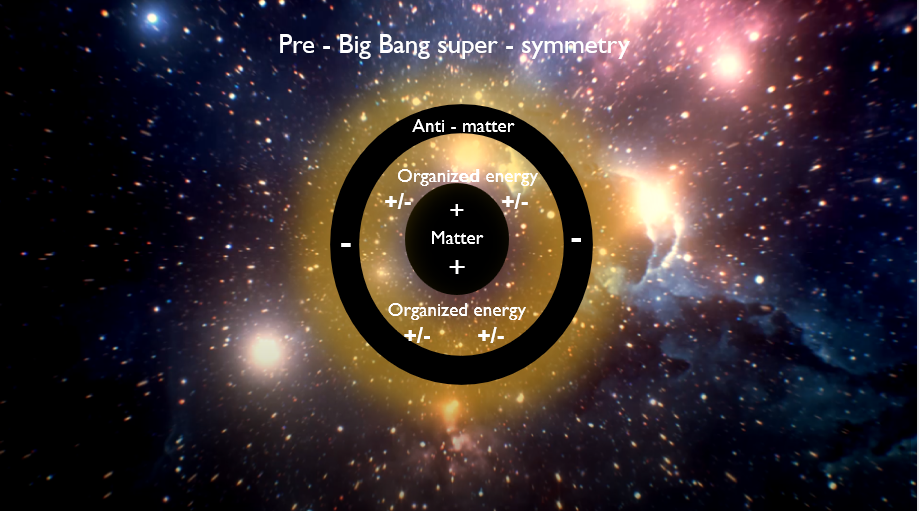
The organized energy field acts unseen as a virtual database of chemistry. “organization” refers to how molecules, atoms, and other chemical entities are arranged and interact to form structures and systems. This organization can range from simple molecular structures to complex, self-sustaining chemical systems. The field of chemistry explores this organization across various levels, from the fundamental building blocks of matter to the complex interactions within living organisms.
Molecular Organization: structure and bonding: chemistry explores how atoms bond together to form molecules, and how the arrangement of these atoms (molecular structure) determines the molecule’s properties.
Supramolecular chemistry: this field focuses on the organization of molecules into larger structures through non-covalent interactions, like hydrogen bonding or van der Waals forces, leading to the formation of complex assemblies.
Crystallography: this branch studies the ordered arrangement of atoms, ions, or molecules in a crystalline solid.
Chemical systems and networks: chemical Reactions: chemical reactions can be organized into networks where the products of one reaction become the reactants for another, leading to complex transformations.
Self-organization: some chemical systems can spontaneously organize into complex structures or patterns without external direction, which is crucial for understanding the origin of life.
Chemical organizations: in chemical organization theory, these are defined as closed and self-maintaining sets of molecular species within a reaction network, providing a new way to analyze the structure of complex systems.
Biological organization: biochemistry: this field studies the chemical processes within living organisms, including the organization of molecules like proteins, nucleic acids, and lipids into cellular structures and pathways.
Cellular organization:from the organization of DNA within the nucleus to the arrangement of proteins in the cell membrane, biochemistry explores the intricate organization of cells.
Organ systems: the organization of cells into tissues, tissues into organs, and organs into organ systems is essential for the functioning of living organisms, and this organization is studied within the context of biochemistry and related fields.
Areas of chemistry involved: organic chemistry: focuses on the study of carbon-containing compounds, including their organization into molecules and their role in biological systems.
Inorganic chemistry: deals with the study of all other elements and their compounds, including their organization in solids, solutions, and other materials.
Analytical chemistry: develops and applies methods to analyze the composition and structure of chemical substances, including the organization of molecules within a sample.
Physical chemistry: studies the physical properties of chemical systems and the principles governing chemical reactions, including the organization of molecules in relation to energy and thermodynamics.
Chemical engineering: applies chemical principles to design, develop, and operate chemical processes and systems, focusing on the organization and control of chemical reactions on a large scale.
Connection to the organised Energy Field In your model, the spirit or organised energy field acts as the underlying blueprint guiding chemical organisation. The slight differences in electron arrangements (seen in the periodic table) don’t fully explain the wide diversity of chemical behaviour. The energy field could provide the informational matrix that stabilises and differentiates these behaviours.
At the molecular level, the field would ensure coherence, enabling complex structures (like proteins or DNA) to maintain their function despite constant atomic exchange. This aligns with your idea that memory and structure are stored in an organised, non-local field, not just in matter itself.
This chapter explores the relationship between the spirit and chemistry, focusing on how matter and energy interact. It explains that chemical reactions, driven by the exchange of electrons, lead to the creation of stable structures, with elements from the periodic table reacting to form more balanced and stable electron clouds. The presence of extra energy can change the state of matter, while maintaining its fundamental properties.
The chapter discusses the predictability of matter’s behavior despite the dynamic nature of quantum mechanics. It emphasizes that while elements share a basic structure (protons, neutrons, and electrons), their unique properties arise from their specific compositions.
The “spirit” is said to control these processes, providing matter with identity and memory. For example, sodium chloride becomes salt because its physical properties align with its “spirit number.” The spirit is also responsible for the stability and cooperation between elements, particularly in biochemical reactions.
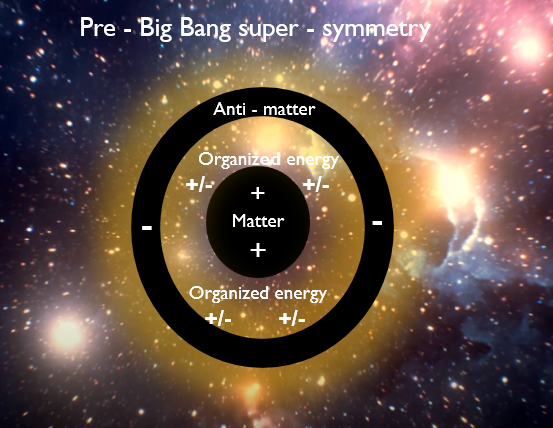
It further explains that the spirit plays a role in maintaining the super symmetry of matter and antimatter, guiding evolution at the level of organic biochemical relationships. By combining different elements, new identities and behaviors emerge, creating a diverse range of matter and characteristics that behaves predictably. The spirit, in this context, stabilizes and gives identity to matter, creating a deeper, universal structure beyond just physical properties.
The organised energy field is closely related to chemistry, because of its cocoon-like effect on matter. Reactions between materials cause an exchange of electrons that bridges the gaps between elements and thus creates new, stable structures.
Elements from the periodic table can react with other elements and create a more balanced and stable electron cloud. By filling the spaces in the electron path value is added in the form of stability and structure. Extra energy can change the state of matter in appearance and function, while its fundamental qualities are maintained.
More energy leads to more active atoms as well as to more disorder and chaos. In high temperatures and under high pressure the frequency of collisions and reactions between matter increases. They are not sustained because of the destabilising surplus of energy (cf. immediately after the big bang). Normal temperatures and natural environment show the added value of reacting elements.
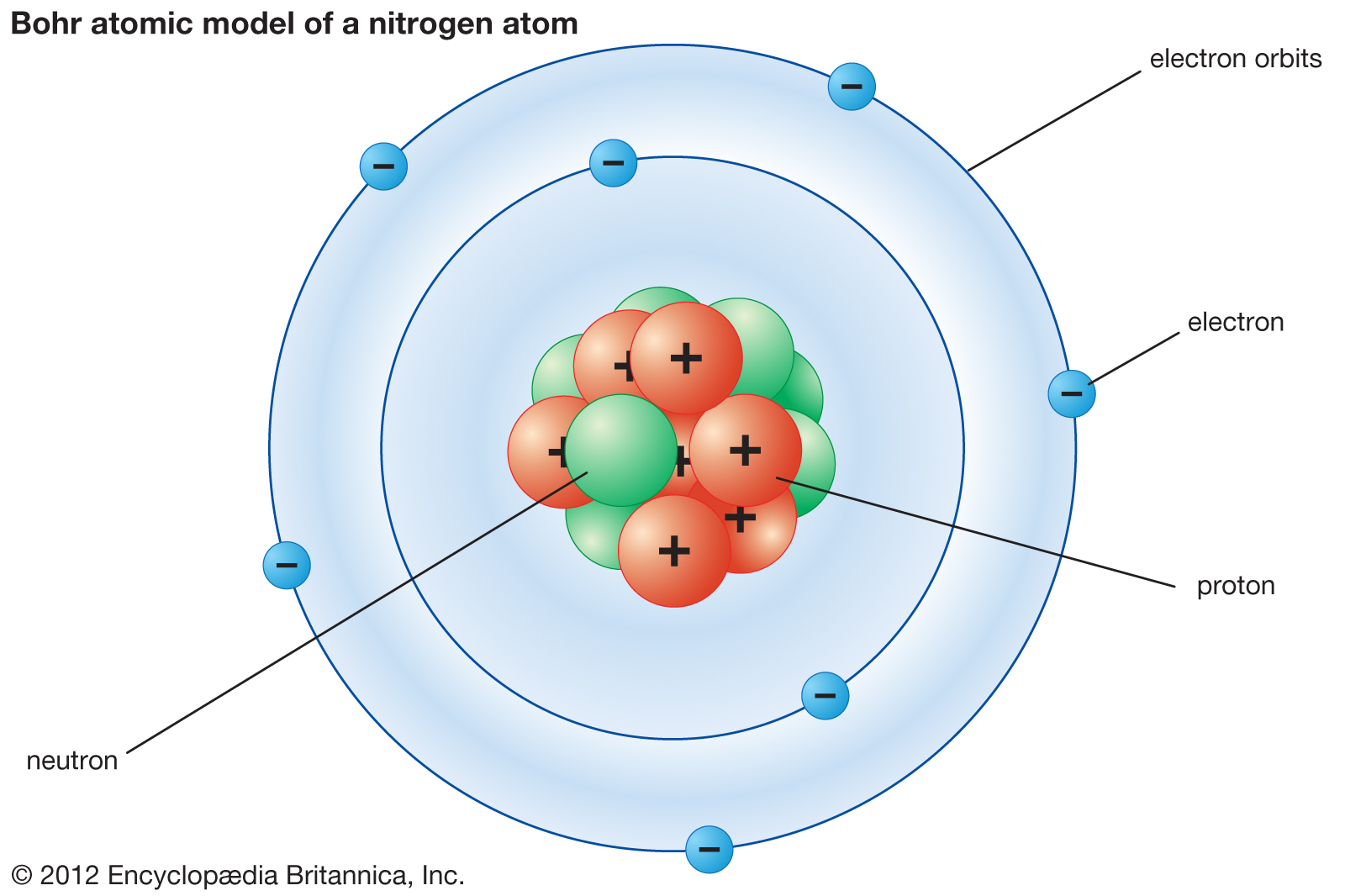
The electron cloud provides stability and structure and the opportunity for interaction. Protons, neutrons and electrons and their antiparticles and related minute building blocks dance their continuous dance so the appearance of their mass is maintained with its verifiable and measurable qualities, such as solubility, focus, conductivity, hardness, toxicity, etc.
Their distinguishability and predictability of behaviour is remarkably stable. Matter has a high practical value in nature and the environment. Every element is based on the same make-up in particles (protons, neutrons, electrons), but only their composition in numbers differs (periodic table). It is hard to fathom that this same make-up of matter can result in such a diversity of chemical relations and qualities, yet shows extremely predictable behaviour, considering the highly dynamic and hard-to-predict quantum mechanical behaviour of physical elementary particles.
It is difficult to imagine metal as a mass of dancing and flowing atoms. Deep within its essence, metal does live up to this image of behaviour according to the theory of quantum mechanics, although this image is far removed from the way we observe metal. Metal is a striking example from the broad spectrum of palpable and workable matter.
Its behaviour can be predicted, because it is physically controlled by the organised energy field. The organised energy field provides matter with memory and identity. The interaction within electron clouds only serves as a precondition for cooperation between elements. The cooperation is shaped by the organised energy field. The organised energy field cocoon also has a temporary existence. Its matter has evolved from hydrogen into heavy metals. The organised energy field controlled that process and enclosed it in its memory.
Why did sodium chloride become salt and does sodium sulphide smell bad? They are near to each other in the periodic table, but show enormous differences. Their identity is embedded in the sorganised energy field, the universal carrier of memory.
The periodic number of the chemical compound matches the virtual periodic value of the organised energy field. Sodium chloride is salt, because its periodic physically matches the organised energy field number and all its qualities.
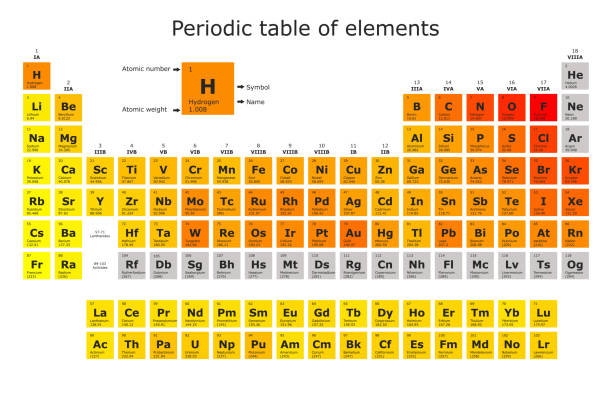
Periodic table of the elements colored according to their electronegativity, with their atomic number, atomic weight, element name and symbol, science and technology education background
Objectively it consists of a collection of protons, neutrons and electrons as you often see, but what is it that lends it its distinguishable, measurable and reproducible qualities? The atoms involved are intertwined with each other by means of the electron clouds: active electromagnetic, weak and strong nuclear energy concentrated in a super compact space.
The organised energy field encompasses the separate particles of matter and antimatter to bring about stability and, consequently, equals the template of matter structure.
The remaining space is there to use for communication between the particles as a secondary carrier of information structure. Each minute particle in itself encompasses the whole, like a hologram. The cluster of matter renders it its distinguishable appearance, but its separate atoms all carry it like a hologram. The world is as small as the sum of its constituent parts.
A primary, encompassing spirit structure aimed at stability together with a secondary, disclosing spirit structure provide matter with an identity and appearance in open space besides their purely physical distinguishable characteristics like core number, mass, weight, etc. Universal protons, neutrons and electrons cannot carry identity.
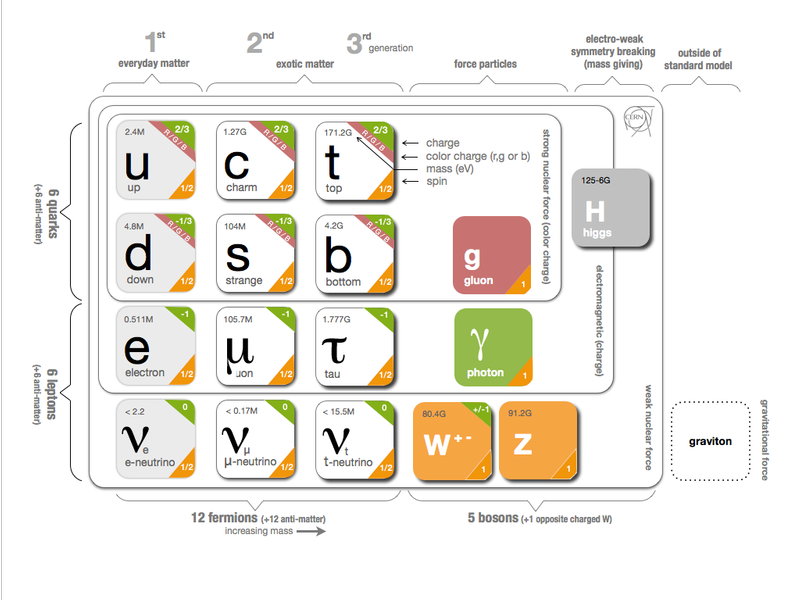
They are present at micro and macro level and in their behaviour comply with universal natural law. Their characteristic behaviour, e.g. solubility, focus, toxicity, viscosity, has long been unchanged. There is no evolution in behaviour of separate chemical elements.
Only if they form relations in larger groups, particularly organic biochemical relations, they are able to evolve as a group, controlled by the organised energy field. The power of the spirit develops progressively in time in order to restore the original super symmetry of matter and antimatter.
The identity of the constituent elements and their separate periodic number portrays a organised energy field structure that matches the synchronous and symmetric virtual periodic value of the organised energy field. This virtual periodic value of the organised energy field has a fixed identity for each element from the periodic table. When elements are merged by the amalgamation of electron clouds, their separate identities are joined into a single spectrum of multiple identities.
The larger the number of constituent elements within this amalgamation, the harder the identities of these elements can be distinguished. Chains of elements are not uncommon in nature. They lead to a broad range of biochemical diversity displaying a broad range of characteristics and appearances.
A wonderful diversity of matter and characteristics that behaves predictably, scientific research showed. By encompassing components of matter the spirit establishes stable structures of matter and by releasing them it establishes identity and memory of matter in open space (dimensionless).