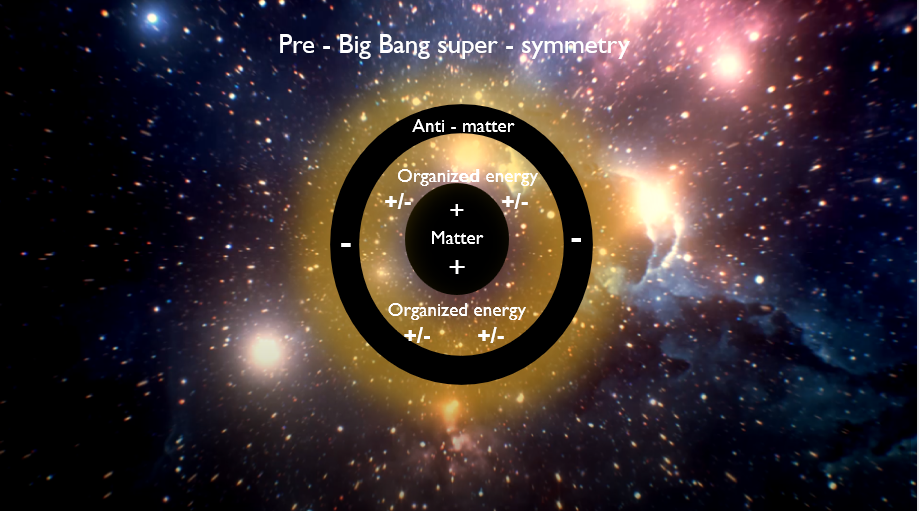
The organized energy field acts unseen as a virtual database of (sub) self-consciousness. Self-consciousness, the awareness of oneself as an individual, can be understood through its structure and organization. It involves a sense of self, a first-person perspective, and the ability to reflect on one’s own thoughts and experiences.
This awareness is not a static entity but rather a dynamic process, involving both minimal or core self and a more developed, narrative self.
Here’s a breakdown of the key aspects of self-consciousness: minimal self: this refers to the basic sense of embodied subjectivity and presence in the world. It’s the foundation for developing a more complex self-concept. This minimal self is not a separate entity but rather a necessary component of any subjective experience. Narrative self: this involves the ability to construct a coherent narrative about oneself, including one’s past, present, and future. It relies on language and the ability to represent oneself to oneself and others. This narrative self is built upon the foundation of the minimal self and its ongoing interactions with the world.
Social and interpersonal influences: self-consciousness develops through social interactions, particularly during infancy and childhood. Interpersonal validation of one’s subjective identity is crucial for solidifying self-awareness. The social environment, including family, peers, and culture, shapes the development of self-concept and self-esteem.
Self-organization: some theories propose that self-consciousness is a self-organizing process, where the brain creates and maintains a sense of self through ongoing activity. This process involves integrating information from various sources, including sensory input, emotions, and memories.
This self-organization is not a rigid structure but rather a dynamic and flexible process, constantly adapting to new information and experiences.
Neurobiological basis: certain brain structures and neural networks are implicated in self-consciousness. These structures are involved in various cognitive and emotional processes, highlighting the interconnectedness of different aspects of self-awareness.
In essence, self-consciousness is a complex phenomenon that emerges from the interplay of minimal self, narrative construction, social interactions, and ongoing self-organization within the brain.
Biological foundation ; neural basis: self-consciousness arises from networks in the prefrontal cortex, parietal lobes, and their interaction with memory systems. Integration of senses: The brain constantly processes external stimuli (sight, sound, touch) and internal states (feelings, body awareness) into a coherent “self”. Memory & language: long-term memory and symbolic language allow humans to reflect on themselves and narrate their identity.
Cognitive structure ; self-awareness: Awareness that “I exist” and can distinguish myself from the environment. Reflective thought: the ability to think about one’s own thoughts (“metacognition”). Agency: the sense of being the cause of one’s actions. Continuity: linking past, present, and imagined future into a unified identity.
Psychological organisation ; personal identity: Built from memory, personality traits, values, and life experiences. Emotion & motivation: shape how the self interprets reality and guides behaviour. Social reflection: consciousness of self also depends on recognition and feedback from others.
Philosophical / spiritual dimension ; self vs. spirit: In your organised energy field framework, self-consciousness is the subjective labelling of objective reality by the spirit cocoon. Memory as non-local: Self is not just neurons but the spirit’s imprint, which stores identity beyond the body. Creative imagination: art, music, abstract thought show how self-consciousness goes beyond survival into reshaping reality. Moral awareness: the self as a reflective entity can ask: What ought I to do?
Organisation model ; we can see self-consciousness as layered organisation: Biological base → brain and senses.~~Cognitive processes → awareness, memory, agency.~~Psychological identity → emotions, personality, social roles.~~Spiritual/field dimension → non-local memory, imagination, higher reflection. Each layer builds upon the previous one, with the organised energy field acting as the unifying structure that makes continuity of the “self” possible despite constant physical change.
Summary: self-consciousness is an emergent structure that organises biological, cognitive, psychological, and spiritual dimensions into a coherent identity. It is not just a brain product but an interaction with the organised energy field, which preserves memory and continuity across time.
A person’s behavior is influenced by both cultural factors and their unique personality traits. While some personality aspects are innate and immutable, they can be shaped by environmental influences. These traits, good or bad, can be adjusted through reinforcement or suppression but never entirely eradicated. In times of conflict, these traits often emerge in their most authentic form.
Personality is the individual blueprint of the spirit, often reflecting parental behavior and inherited genetic traits. Additionally, individuality stemming from past lives can influence a person’s personality. This inherited individuality transcends genetic transfer, suggesting a spiritual dimension to personality development, akin to karma.
Thought patterns and lessons from past lives are stored in a form of memory unaffected by death, creating a transferrable thinking pattern. Personality traits inherited from parents and past lives, combined with environmental influences and life experiences, shape a person’s unique identity.
Personality strongly motivates the emotional encoding of stimuli into long-term memory. Cultural and personality-based selection ensures important stimuli are processed, while less significant ones are merely noticed. This mechanism reinforces individuality and provides confidence in navigating one’s environment. However, strong new stimuli can disrupt this routine, leading to new insights.
Personality traits are etched in neural networks, forming predictable thought patterns. These traits and experiences create a selection mechanism for stimuli, shaping programmed human behavior and thinking, influenced by a blend of genetics, past experiences, and environmental factors.
Apart from cultural factors, a person’s behaviour is also influenced by their personality. Some personality traits seem to be innate and cannot be changed. However, they can be reinforced or diminished by environmental factors.
Good and bad traits can be adjusted by stimulus and suppression, although they will never disappear entirely. Particularly in situations of conflict, when all inhibitions are abandoned, these traits can manifest themselves in their purest form.
Personality is the individual blueprint of the spirit’s personality. To some extent, children always seem to represent either or both parents in behaviour and personality. So these aspects are geneticspirally determined and inherited.
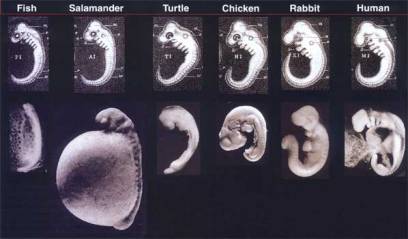
Some individuality, existing in addition to the inherited traits, can also be detected. This individuality can stem from a previous life. It is unique and coupled specifically to certain lives. It is a transferrable pattern of thinking that is not limited to a person’s life, but is taken on to a new life ,like karma.
The patterns of thought and lessons learnt from a previous life are deposited in memory, or in an imaginary number sequence, that is not affected by death’s finality. This kind of heredity surpasses the usual genetic transfer of data in nature, because it is conducted on a different level than purely biochemically.
A personality trait is passed on by both parents and inherited from previous lives, similar to influences from the environment and events in someone’s life. The last factor contains elements of learning and experience and thus constitutes a personal contribution.
Personality is a strong motivation by which received stimuli are emotionally charged in order to store them in the long-term memory. Selection of data based on culture and personality ensures numerous stimuli are merely noticed, whereas some important ones are adequately processed.
This selection mechanism reaffirms a person’s individuality permanently. This provides a person with the confidence to operate within their environment. Only strong new stimuli can cause disturbance and lead to new insights.
This affirmation of personality and culture deposits through living a routine life with a predictable course of events is not equally possible for all people. Every person is different (genotypically and phenotypically). Imbued karma contains a destiny and learning route that are different for every person.
It is a universal memory that leads to very diverse results. Diverse to such an extent that the given principles are hard to discern. Personality traits, both inherited and learned, are etched in neural networks. These deposits create patterns of thought that can be controlled and predicted.
Personality deposits serve as a means to select received stimuli, like programmed human behaviour and thinking.
https://pre-bigbang.duckdns.org/einstein-said-gravity-is-not-a-force/
https://pre-bigbang.duckdns.org/the-meaning-of-life-in-a-different-perspective/