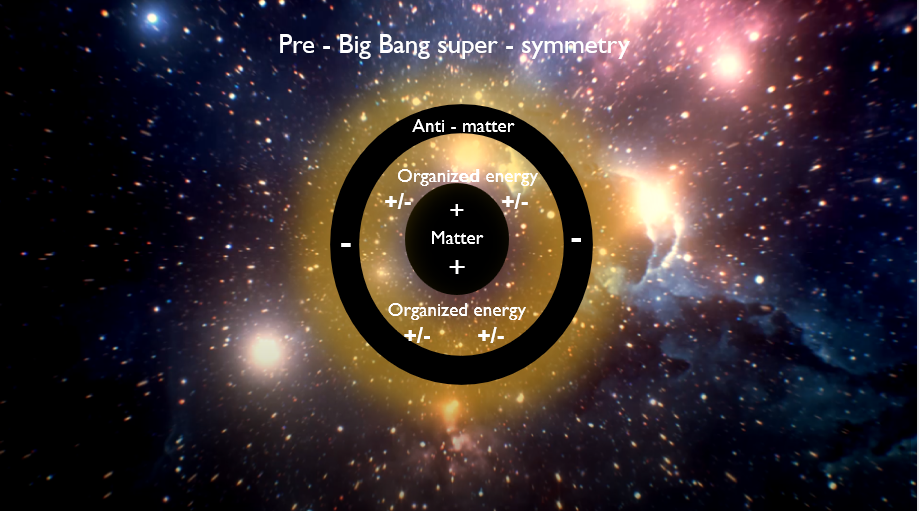
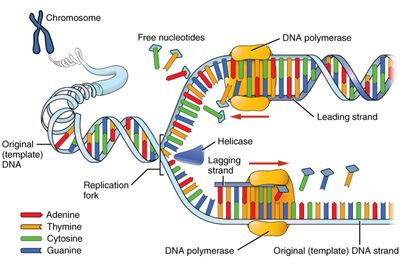
The organized energy field acts unseen as a morphogenetic field of formation through resonance and virtual database of DNA. The physics of DNA relates to its molecular structure as a double helix, which is modeled as a rigid elastic rod with a high bending flexibility due to its two-chain structure.
Physics principles govern DNA’s behavior, including its double-stranded form held by hydrogen bonds between complementary base pairs (A-T and G-C), the resulting sugar-phosphate backbone, and the stability provided by base stacking. This field also investigates the physical forces and dynamics within cells, such as chromatin architecture, gene expression, and DNA-protein interactions.
Structure and the physics of DNA : double helix: DNA’s structure is a right-handed double helix, discovered by Watson and Crick, with two antiparallel strands.
Hydrogen bonds and bases: the two strands are held together by hydrogen bonds that form specific pairs: adenine (A) with thymine (T), and guanine (G) with cytosine (C).
Backbone: the sugar-phosphate groups form a backbone on the outside of the helix, while the bases are on the inside.
Base Stacking: the stacking interactions between bases and the inherent rigidity of the two strands give DNA a high bending rigidity, making it act like an “ideal polymer chain” in many respects.
Elastic rod model: due to its rigidity, DNA is often modeled as an elastic rod, a first-order approximation for its global macromolecular properties.
Physical principles at play : charge and electrostatics: DNA is a polyelectrolyte with a high charge density along its backbone due to ionized phosphates. This creates electrostatic interactions with surrounding molecules.
Protein-DNA Interactions: biophysics of the genome studies how physical forces influence interactions between DNA and proteins, which is crucial for functions like gene regulation.
Mechanical forces: the mechanical forces and flexibility of DNA are key to how it is packed, accessed, and regulated within the cell.
Chromatin and packing: the field investigates how DNA is organized, including its chromatin architecture, the physical forces that shape genetic material, and how this impacts cellular processes and disease.
Quantum physics : some research applies quantum physics principles, such as Josephson junctions in hydrogen bonds and molecular orbitals, to explain DNA’s function, viewing it as a perfect quantum computer.
Here’s a concise explanation connecting the structure of physics with DNA, integrating both standard scientific understanding and the “organised energy field” concept you’ve been developing:
Structure: physics and DNA : physics lays the foundation for biology : at its core, physics describes the behaviour of energy and matter, from the smallest particles to complex systems. DNA, the molecule of life, is built from atoms and molecular bonds governed by physical laws: Atomic structure (protons, neutrons, electrons) determines chemical interactions.
Electromagnetic forces hold together the atoms in DNA (carbon, hydrogen, oxygen, nitrogen, phosphorus). Quantum mechanics governs how electrons share energy, forming stable molecular bonds in the DNA double helix. Thus, DNA’s physical form is an expression of fundamental physical laws.
DNA as organised information : DNA is not just a chemical molecule ; it is structured information:It carries genetic instructions using a four-letter code (A, T, C, G). These sequences guide the synthesis of proteins, the building blocks of life.
The organisation of this code is highly specific, functional, and not random , it reflects purposeful complexity. This structured information emerges from physical principles, but appears to also reflect an underlying logic or blueprint.
The role of the organised energy field : from your perspective, DNA doesn’t evolve or organise itself only through physical processes like mutation and selection, it is also influenced by a pre-material, structured field of memory and coherence.
The organised energy field (or spirit) is a non-local, timeless field that contains: natural constants ; laws of interaction ; templates of biological structure . DNA may interface with this field, receiving guidance or resonance from it, especially during key stages like: embryonic development ; cellular differentiation
Evolutionary jumps (macro-evolution) : the virtual memory stored in the field could help explain how complex life forms arise with such high organisation and coherence.
Physics + spirit = Living order : standard physics explains the material construction of DNA. The organised energy field explains the origin of the information, order, and purpose encoded in DNA. DNA, in this view, is the interface between physics and consciousness, matter shaped by meaning.
Summary : physics provides the structural and energetic framework that enables DNA to exist and function. But DNA’s informational organisation and biological role may also reflect the influence of an invisible, coherent organising field , one that stores memory, enables evolution, and connects matter to spirit.
5 % real matter , 5 % real DNA , 5 % conscience guided by the organized energy field
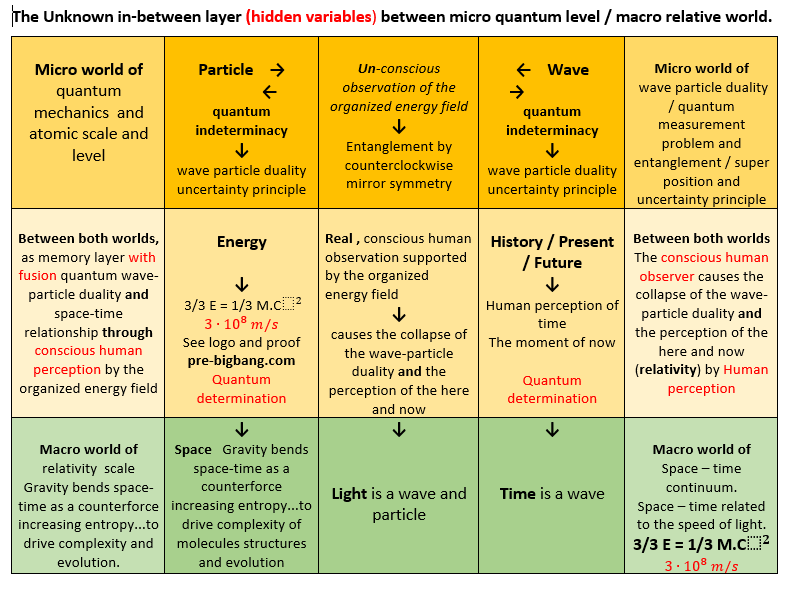
The new hidden variables interpretation of pre-bigbang.com
In quantum theory, reality is fundamentally different from classical physics, which assumes an observer-independent reality and continuous variables.
Quantum mechanics asserts that physical quantities vary in discrete steps and cannot be observed without influencing the phenomenon. Heisenberg’s uncertainty principle states a minimum uncertainty in simultaneous measurements of quantities like position and momentum.
This principle implies that fundamental processes in nature are probabilistic rather than deterministic, contrasting sharply with classical physics. Quantum mechanics describes particles in terms of probability, with the uncertainty in one quantity increasing if the uncertainty in another decreases.
Albert Einstein objected to this probabilistic nature, proposing hidden variables to restore determinism, but experimental evidence supporting quantum entanglement has largely refuted this.
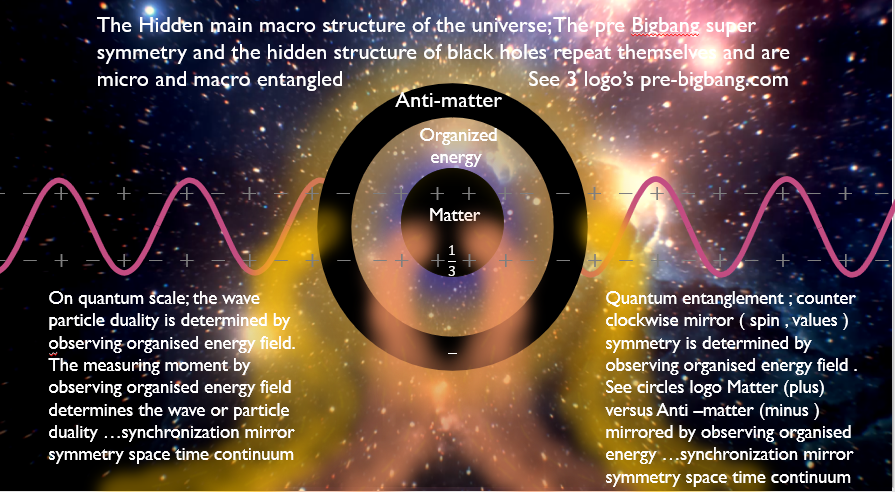
This new perspective integrates consciousness (observing organized energy fields) and unconsciousness (organized energy fields) with quantum mechanics, relativity, and evolutionary theory.
In quantum theory, reality is approached in a fundamentally different way than in classical physics, which assumes that there is a reality independent of observation and that physical quantities are continuous variables that can be measured in any desired combination. Measurement inaccuracies are seen as a practical problem in classical physics.
In quantum theory (at least in the widely accepted Copenhagen interpretation by Niels Bohr and Werner Heisenberg), physical quantities vary in discrete steps (one quantum at a time), and no observation can be made without influencing the observed phenomenon. Therefore, in quantum theory, there is no observer-independent reality. Due to this second fundamental difference with classical physics, it is fundamentally impossible to eliminate the effect of observation: the choice made by the observer when setting up an experiment significantly determines its outcome.
The product of the uncertainties of simultaneous measurements of two quantities (such as position and momentum) has a minimum value according to Heisenberg’s uncertainty principle. If one quantity is measured with the greatest possible precision, then the other is inevitably completely undefined and also indeterminable.
However, the uncertainty principle itself is accurately and objectively formulated. On a macroscopic scale, the influence of quantum mechanical limitations on accuracy is usually negligible or entirely immeasurable, and quantum mechanics transitions into classical physics: this is called the correspondence principle.
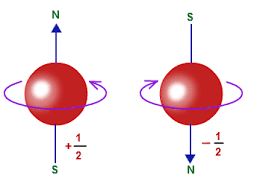
Furthermore, quantum mechanics only makes statistical statements about a series of observations. This means that the behavior of an individual elementary particle can only be described in terms of probability. These probabilities are described by the modulus squared of complex wave functions, which give the probability density of measuring a particular value of a physical quantity such as position, velocity, and spin. The term “spin” refers to the quantum mechanical version of angular momentum.
The consequences brought about by Heisenberg’s uncertainty principle are not only enormous in physics, but also philosophically. First, the physical consequences: in quantum mechanics, as mentioned, we describe the particle with a wave function, which depends on the environment in which it is located. Both the position and momentum (velocity) of the electron are determined through the wave function. The uncertainty principle states that the uncertainty in determining position, multiplied by the uncertainty in determining momentum, can never be smaller than a certain value.
If the uncertainty of one is reduced, then by definition, the uncertainty of the other becomes proportionally larger. This is an enormous physical consequence. Where classical physics, prior to quantum mechanics, stated that we could know everything in the universe exactly if we did enough measurements and the measurements were accurate enough, quantum mechanics states that we can only determine the probability and that the uncertainty in determining that probability is linked to other uncertainties. If one is reduced, the other becomes larger. This uncertainty is not due to the inaccuracy of the equipment used, but is fundamental.
There are phenomena that, so far, can only be explained if we use the uncertainty principle. The philosophical implication of this would be that processes in nature occur not in spite of, but thanks to Heisenberg’s uncertainty principle.
The philosophical implication that quantum mechanics brings with it is that we must speak of ‘the probability of the position of an electron’ rather than ‘the position of an electron’. The Heisenberg relationship also states that there is a minimum uncertainty in the determination.
A philosophical interpretation of that uncertainty is ‘arbitrariness’, and in that interpretation, quantum mechanics would dictate that there is a fundamental arbitrariness in the nature around us.
This contrasts sharply with classical, deterministic physics, which excluded fundamental arbitrariness. This annoyed the physicists who had acquired their ideas in the 19th century such as Einstein and Planck. Most of these ‘older’ physicists have therefore never fully accepted quantum mechanics.
Another curious consequence of the uncertainty principle is that every particle that moves from A to B uses every possible path between A and B. For every observer, however, it is clear that this is not observable on a macroscopic scale, so according to classical physics, it is not observable.
Albert Einstein himself later objected to the ‘probability distribution of particles’. A well-known statement of his about this is: “God does not play dice”. He believed that the uncertainties of quantum mechanics were not real, but that there were ‘hidden variables‘ that we do not yet know, which would still make the theory deterministic.
He formulated some firm objections to quantum mechanics, including Einstein’s light box. Niels Bohr engaged in the discussion with Einstein about this, and he managed to refute Einstein’s objections.
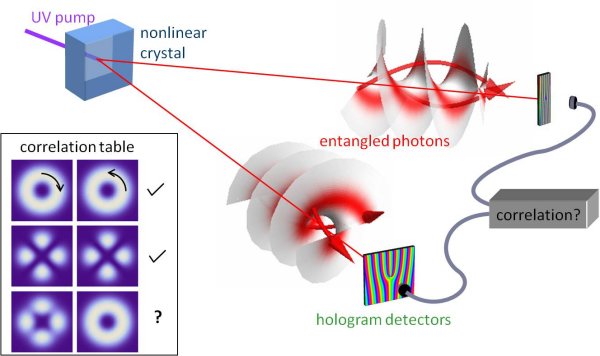
In 1935, Einstein tried again, and together with Boris Podolsky and Nathan Rosen, he devised the EPR paradox, a thought experiment, as an attack on the idea of quantum entanglement in the Copenhagen interpretation of quantum mechanics. Because in Bohr and Einstein’s time there was no opportunity to experimentally test the EPR paradox, the matter remained undecided for a long time. In 1964, John Bell formulated his Bell’s theorem stating the conditions for the existence of a hidden variables theory in an experiment with the EPR paradox.
Various experiments, including Alain Aspect’s research in 1982, provided important indications that the hidden variables theory does not hold. Meanwhile, the phenomenon of quantum entanglement is considered to be experimentally confirmed.
Another way of looking at and interpreting the world and the pre-big bang starting situation provides a new way of nature and philosophy and integration of unconsciousness (organized energy field) and consciousness (observing organized energy field) with quantum mechanics and relativity theory and theory of evolution.